


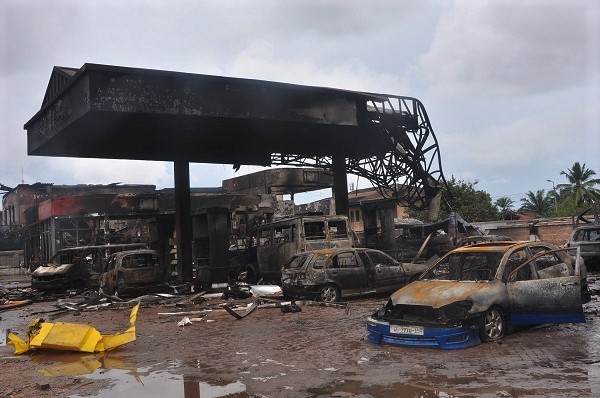
Eleven years ago today, Ghana awoke to one of the darkest chapters in its history. What began as a heavy downpour on the evening of June 3, 2015, quickly transformed into a national tragedy that would leave an enduring scar on the country’s collective memory.
The flood and fire disaster at the Kwame Nkrumah Circle in Accra claimed more than 150 lives, injured scores of others, and exposed deep vulnerabilities in urban planning, drainage systems, and emergency preparedness.
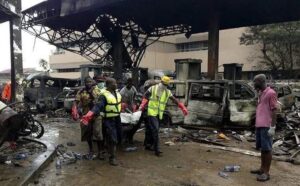
As torrential rains pounded the capital, floodwaters surged through streets, homes, and businesses. Thousands of commuters and residents found themselves trapped by rising waters.
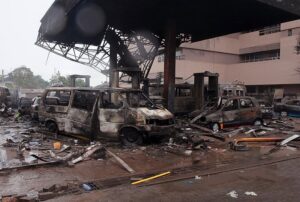
Many sought refuge at a GOIL filling station near Circle, believing it to be a safe haven from the storm. Instead, it became the epicentre of a catastrophe that would shock the nation.
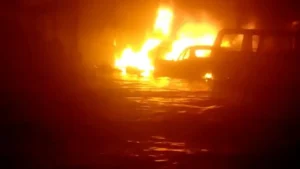
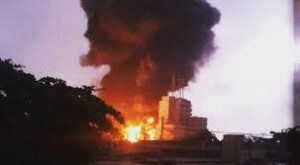
Floodwaters mixed with leaking fuel from the station, creating a deadly layer of petrol on the surface. In a matter of moments, a spark ignited the fuel, triggering a massive inferno that engulfed vehicles, buildings, and hundreds of people seeking shelter.
The horrifying sight of flames burning atop floodwaters left Ghanaians struggling to comprehend the scale of the disaster.
The aftermath was devastating. Families searched desperately for missing loved ones. Hospitals became overwhelmed as emergency responders worked tirelessly to recover bodies and treat survivors suffering from severe burns and injuries.
The nation observed days of mourning as grief swept across every region of the country.The June 3 disaster was more than a natural tragedy; it was a stark warning.
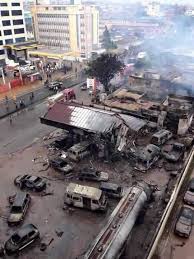
Investigations pointed to clogged drains, poor waste management, unchecked development along waterways, and inadequate drainage infrastructure as key factors that worsened the flooding.
The disaster sparked renewed conversations about urban planning and environmental responsibility in Accra.
Yet, eleven years on, the memory of June 3 remains painfully alive for survivors and bereaved families.Many continue to live with physical scars, emotional trauma, and unanswered questions.
For them, the anniversary is not merely a date on the calendar but a reminder of lives cut short and futures forever altered.Today, as Ghana reflects on the tragedy, June 3 stands as both a memorial and a warning.
It is a reminder that disasters are not always acts of nature alone; they can also be the consequence of human neglect, poor planning, and failure to heed past lessons.
The greatest tribute to those who lost their lives may not be the annual remembrance ceremonies, but a commitment to ensuring that such a tragedy never happens again.
Eleven years later, the question still echoes across Accra: Have we learned enough from June 3?
CREDIT: MAVIS FANTEVI