

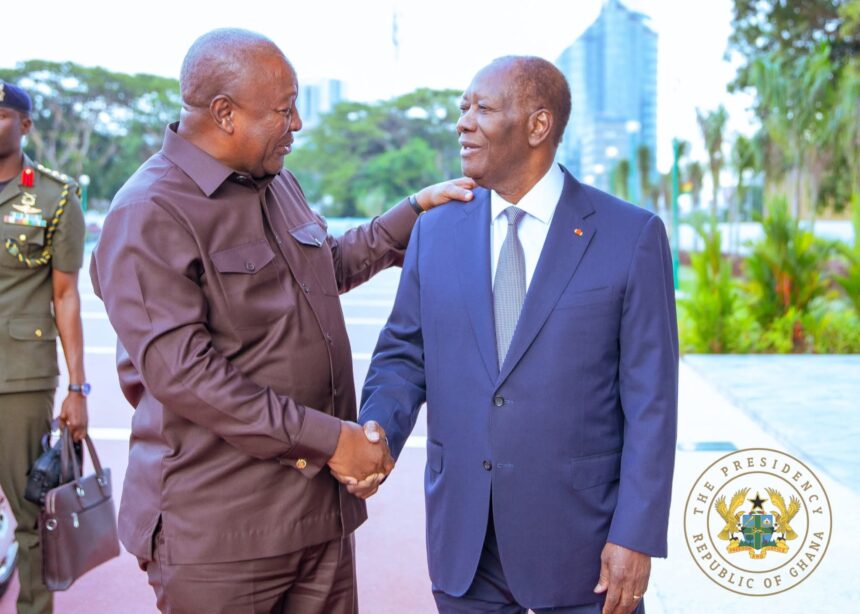
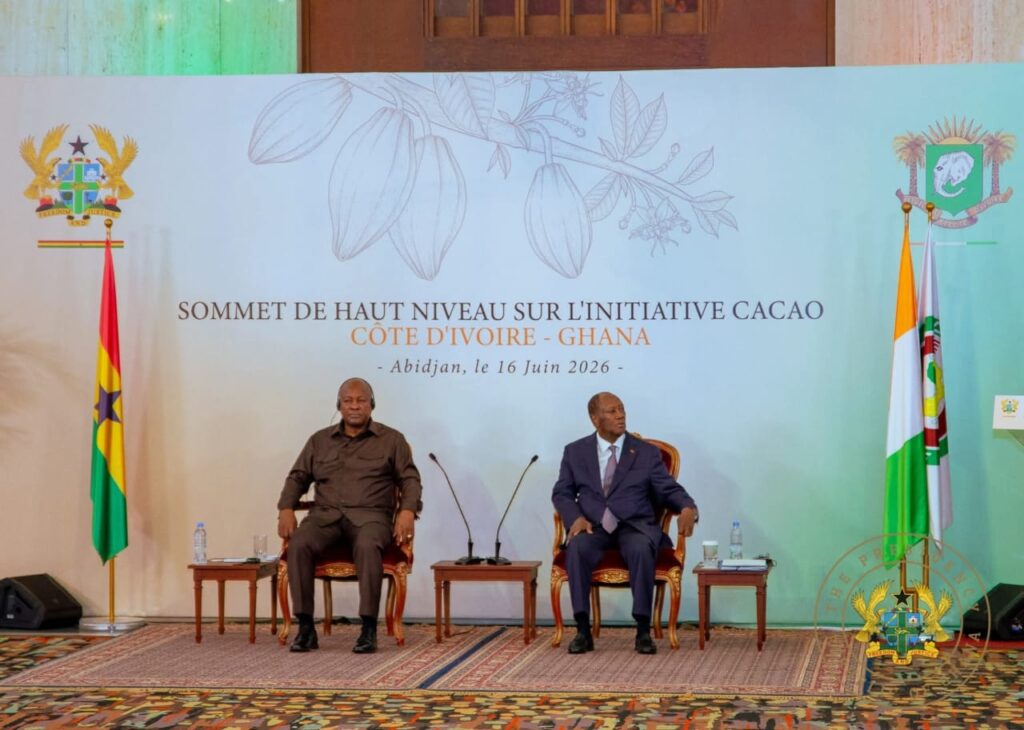
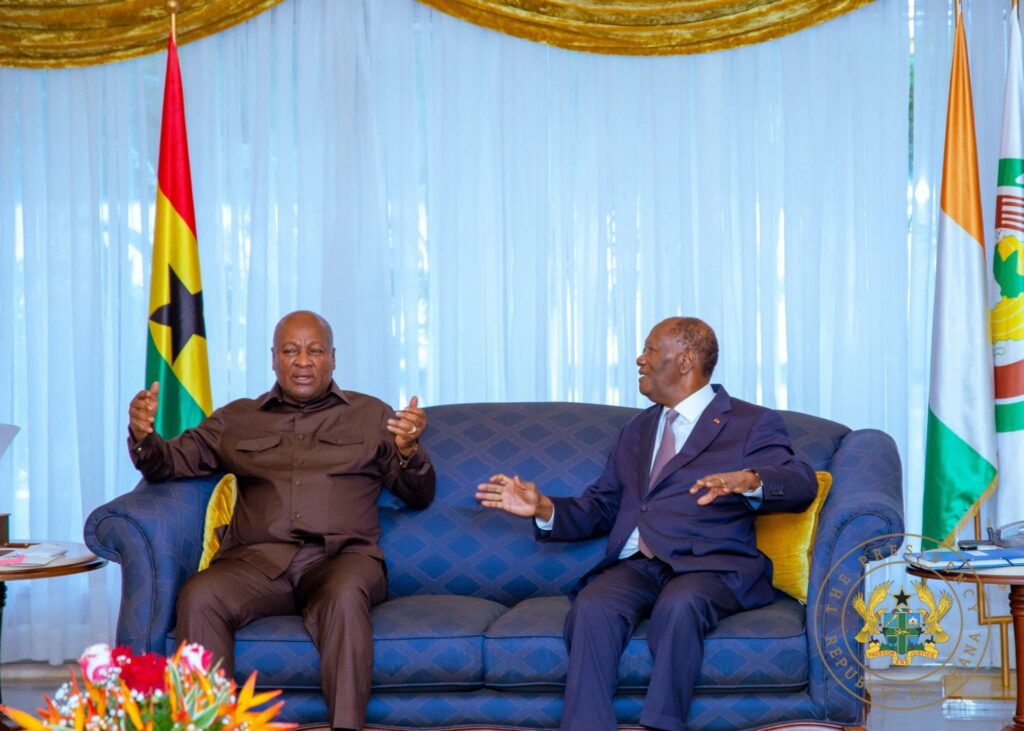
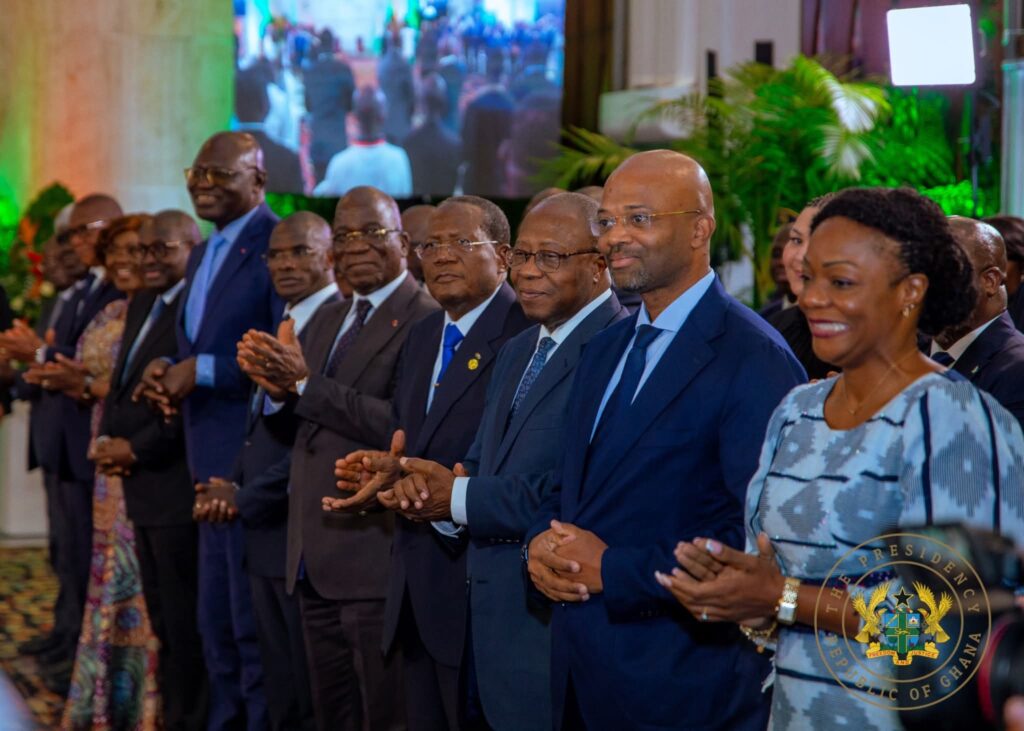
Ghana and Côte d’Ivoire have reaffirmed their commitment to strengthening cooperation in the cocoa sector following a high-level bilateral summit between President John Dramani Mahama and President Alassane Ouattara in Abidjan.
The meeting, held under the Côte d’Ivoire-Ghana High-Level Summit on the Future of the Cocoa Economy, concluded with the signing of a Joint Declaration aimed at ensuring price stability, enhancing environmental protection, and promoting industrialisation within the cocoa value chain.
According to a statement from Jubilee House, the two leaders expressed satisfaction with the work of the Joint Technical Committee and stressed that cocoa farmers must remain at the centre of all decisions affecting the industry.
With Ghana and Côte d’Ivoire producing nearly 60 per cent of the world’s cocoa, both countries emphasized their shared responsibility to drive reforms that guarantee better incomes for farmers.
A major outcome of the summit was the renewed commitment to the Living Income Differential (LID) and efforts to harmonise producer prices. The initiative is expected to strengthen coordination between the two countries on cocoa marketing and price announcements, helping shield farmers from fluctuations in global commodity markets.
The leaders also turned their attention to environmental challenges threatening cocoa production. They expressed concern over the impact of illegal mining on water bodies and agricultural lands and agreed to collaborate on measures to curb the practice, restore affected ecosystems, and address the broader effects of climate change on crop yields.
In addition, Ghana and Côte d’Ivoire pledged to intensify scientific research to combat the Cocoa Swollen Shoot Virus Disease (CSSVD) and other pests that continue to affect cocoa production across the region.
Beyond production, the two nations signalled a strategic shift toward greater value addition. They committed to increasing local cocoa processing capacity and promoting the consumption of cocoa products within Africa, reducing dependence on the export of raw cocoa beans.
The summit also endorsed plans to expand the existing cocoa alliance by welcoming other African cocoa-producing countries. The move is intended to strengthen Africa’s collective bargaining power and increase the continent’s share of the global cocoa-chocolate value chain, despite Africa producing about 80 per cent of the world’s cocoa beans.
Key elements of the Joint Declaration include the implementation of a common framework for determining producer prices, enhanced market intelligence systems, stronger collaboration among research institutions to eliminate CSSVD, increased local processing of cocoa, and the promotion of intra-African trade in finished cocoa products.
The declaration was adopted and issued in Abidjan on June 16, 2026, marking another step in the longstanding partnership between the world’s two largest cocoa-producing nations.
SOURCE: MAVIS FANTEVI