


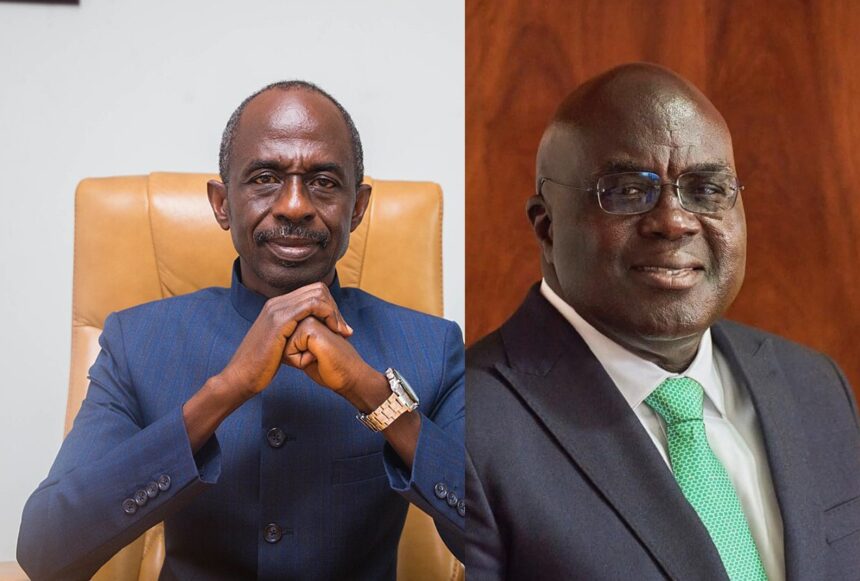
A new nationwide survey conducted by Africa Policy Lens (APL) has revealed a tightly contested race for the Johnson Asiedu Nketia and Julius Debrah as leading contenders for the National Democratic Congress (NDC) 2028 flagbearer position.
The poll, led by Dr. Hayford M. Ayerakwa and conducted between April 17 and April 19, 2026, sampled constituency executives across all 276 constituencies, gathering 2,408 responses through a structured SMS-based survey.
According to the findings, Asiedu Nketia holds a narrow lead with 31.9% support, closely followed by Debrah at 30.1%—a slim margin of just 1.8 percentage points, underscoring the highly competitive nature of the race.
When respondents were asked who they would vote for if elections were held immediately, the trend remained consistent. Asiedu Nketia secured 32.7%, while Debrah followed with 30.9%, suggesting that preferences among delegates are relatively stable and evenly split.
Beyond the two frontrunners, the survey highlights a competitive second tier.
Cassiel Ato Forson was identified by 27.1% of respondents as a “closest opponent,” indicating his continued relevance in the race. Asiedu Nketia also led this perception metric at 29.1%, while Debrah and Haruna Iddrisu trailed with approximately 15–16% each.
The report further reveals that delegates are prioritising leadership qualities over policy proposals in their decision-making.
Experience and track record ranked highest at 66.1%, followed by integrity and honesty (56.8%), ability to unite the party (46.8%), grassroots appeal (46.5%), and charisma and public image (43.9%).
Policy proposals lagged behind at 27.9%, suggesting a stronger emphasis on credibility and cohesion rather than manifesto content.
Analysts say the findings point to a race defined more by balance than momentum, with neither leading candidate able to establish a decisive advantage. Instead, both Asiedu Nketia and Debrah appear to have consolidated strong but limited support bases.
The report concludes that the contest remains “highly competitive but inconclusive,” with the eventual winner likely to emerge based on their ability to expand beyond core supporters, build strategic alliances, and appeal to undecided delegates.
While the survey achieved nationwide coverage, APL notes that participation was voluntary, which may introduce some degree of self-selection bias.
Source: Philip Bright Abutiate