
The number of confirmed Ebola cases in the Democratic Republic of Congo (DRC) has climbed to 344, with 60 confirmed deaths, as health authorities continue efforts to contain an outbreak that has spread into neighbouring Uganda, the World Health Organization (WHO) said on Wednesday June 3, 2026.
Uganda has recorded 15 confirmed cases and one death linked to the outbreak, which is caused by the Bundibugyo strain of the Ebola virus.
Despite the rising case count, WHO officials said response efforts are beginning to catch up with the outbreak after months of intensified surveillance, testing and contact tracing.
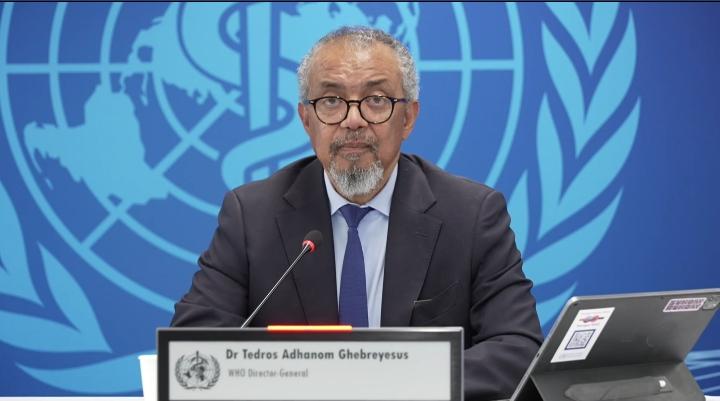
“The outbreak had a big head start, and we’re still behind, but under the leadership of the government of DRC, we’re catching up,” WHO Director-General Tedros Adhanom Ghebreyesus told a press briefing.
Health officials said expanded testing capacity has helped improve understanding of the outbreak’s scale. Laboratories have conducted 1,445 tests, allowing authorities to clear most of a backlog that had accumulated because standard Ebola tests do not detect the Bundibugyo strain.
As a result, hundreds of suspected cases have been ruled out, providing a clearer picture of the outbreak.
“There are new suspect cases every day as surveillance improves,” said Abdirahman Mahamud, WHO Director of Health Emergency Alert and Response Operations.
However, challenges remain. WHO said 116 suspected cases are still awaiting testing, while investigations are underway into 220 suspected deaths to determine whether they were caused by Ebola.
The agency also warned that contact tracing efforts remain below the level needed to effectively contain the virus. Only about 45% of identified contacts are currently being monitored, far short of the more than 90% coverage health experts say is required to stay ahead of transmission.
Travel restrictions imposed by some countries have further complicated response efforts by disrupting supply chains and limiting the movement of critical resources, WHO officials said.
At the same time, recoveries continue to offer hope. Six people in the DRC and two in Uganda have recovered from the disease, demonstrating that early diagnosis and access to treatment can significantly improve survival chances.
Tedros said preliminary investigations suggest the outbreak may have begun as early as January, although efforts to determine its origins are ongoing.
WHO estimates that at least $115 million will be needed over the next three months to support response activities. So far, approximately 35% of the required funding has been secured.
The agency and its partners, including the Africa Centres for Disease Control and Prevention and the governments of the DRC and Uganda, are expected to launch a broader response and fundraising plan on Friday.
CREDIT: MAVIS FANTEVI