


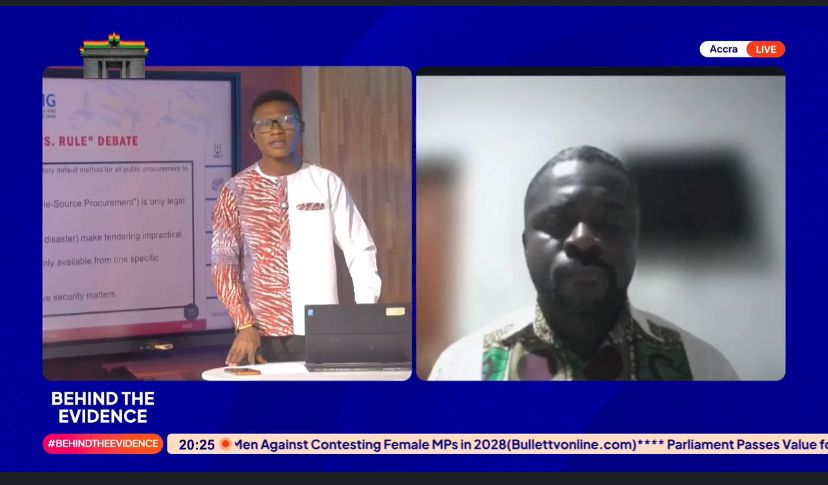
Concerns are mounting over the increasing reliance on sole-sourcing in public procurement, as transparency advocates raise the alarm over potential systemic abuse.
Speaking on Bullet TV’s research and investigation program, Behind the Evidence, on Monday March 30, Kwaku Krobea Asante, Programme Manager for Independent Journalism at the Media Foundation for West Africa (MFWA), revealed startling data regarding government expenditure.

Programme Manager, Independent Journalism, MFWA
According to him, an MFWA analysis found that 81 out of 107 government contracts awarded through sole-sourcing carry serious red flags, suggesting they may not have met the legal requirements for non-competitive bidding.
A Worrying Trend
Mr. Asante described the current trend as deeply “worrying,” noting that while sole-sourcing is legally permissible under specific emergency or specialized conditions, its frequent use has become a shortcut that bypasses competitive tendering.
He cautioned that this shift undermines two pillars of public procurement: accountability and value for money.
“When you have such a high percentage of contracts failing to meet the transparency test, it suggests an intentional circumvention of the rules,” Asante stated during the broadcast.
Calls for Reform
The MFWA’s findings come at a time when public interest groups are calling for stricter oversight by the Public Procurement Authority (PPA). Critics argue that without competitive bidding, the state risks overpaying for goods and services, ultimately depleting the national purse.
The revelation on Behind the Evidence adds to the growing pressure on state institutions to justify the high volume of restricted tenders and sole-sourced deals in recent years.
As of now, the government has yet to issue a formal response to the specific figures cited by the MFWA.