


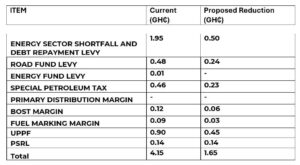
A coalition of civil society organisations, including IMANI Africa, COPEC Ghana, INSTEPR, and Institute for Energy Security, has proposed a GH¢1.65 reduction in petroleum prices to ease the financial burden on Ghanaians.
The recommendation follows a directive by President John Dramani Mahama, who tasked the Ministries of Energy and Finance to review the petroleum price build-up and identify possible reductions in taxes, levies, and margins to provide temporary relief amid ongoing economic challenges.
In a joint press release dated Tuesday April 14,2026, the organisations acknowledged the need for significant intervention but cautioned against measures that could destabilise the downstream petroleum sector.
They stressed that while relief should be meaningful, it must not create “corrosive effects” on the operations and sustainability of the industry.
After consultations, the groups proposed a cumulative reduction of GH¢1.65 in the current fuel price structure.
They further recommended that the relief period be extended to two months, instead of the four weeks earlier suggested by government, to allow for a more sustained impact before any review is conducted.
The coalition argued that the proposal would not place undue pressure on the country’s finances, noting that government is expected to benefit from increased revenue from upstream crude production and exports within the same period.
Beyond the immediate relief, the organisations called for long-term structural reforms to address persistent fuel price increases.
Key among their proposals is a comprehensive rationalisation of existing taxes, levies, and margins, with the aim of permanently eliminating those deemed inefficient or burdensome.
They also urged government to establish a Strategic Reserve Fund, which would use proceeds from selected levies to purchase and store fuel. Such a reserve, they noted, could be deployed to stabilise domestic prices during periods of global volatility.
Additionally, the groups emphasised the need to modernise and upgrade the country’s refining and storage infrastructure.
They called for increased investment in the Tema Oil Refinery and the Bulk Oil Storage and Transportation Company to enhance local refining capacity and fuel storage capabilities.
According to the statement, these reforms align with commitments made by President Mahama during recent engagements with civil society organisations.
The coalition concluded by urging the Ministries of Finance and Energy to consider both the immediate relief measures and the broader structural recommendations to ensure sustainable management of Ghana’s petroleum sector.
CREDIT: Mavis Fantevi