


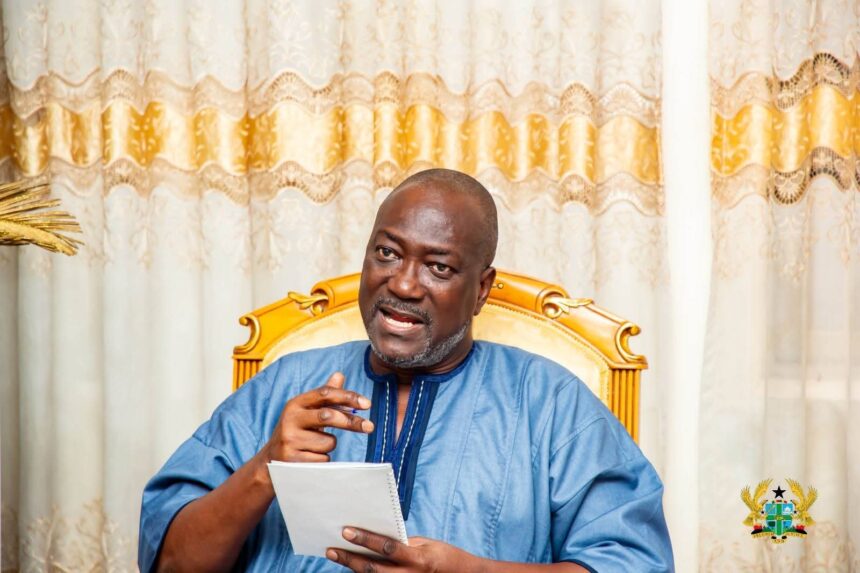
The chairman of Ghana’s Constitutional Review Committee, Professor H. Kwasi Prempeh, is challenging the country’s long-standing policy that requires university lecturers to retire at 60, calling it outdated and inconsistent with the realities of academic life.
In an interview with Accra-based TV3, after the committee presented its final report to President John Dramani Mahama, Professor Prempeh argued that the rule forces out scholars who remain intellectually vigorous, only to bring them back through short-term contracts.
“Many lecturers who retire at 60 are often re-engaged as consultants or contract staff,” he said. “So why can’t they simply continue until 70 or even 80 if they remain mentally fit and productive?”
The committee’s report recommended removing the fixed retirement age from the 1992 Constitution to give universities greater discretion to retain experienced faculty.
Prempeh pointed to the judiciary as a model: “Our judges retire at 65 or 70, so why must university lecturers, some of whom are still very sharp, be forced to retire at 60?”“Some are not even in their prime yet,” he added.
Prof. Prempeh dismissed the notion that mandatory retirement creates space for younger academics, describing it as “overly simplistic” and disconnected from how employment mobility actually works. “The 80-year-old who leaves the classroom is not automatically replaced by a younger person looking for a job. It doesn’t work that way,” he said.
Instead, he urged policymakers to see retirement not as an “employment valve” but as a flexible decision that should reflect the needs of institutions and the capacities of individuals. “Let them work to 70,” he said, underscoring the inefficiency of the current system of short-term re-engagements.