


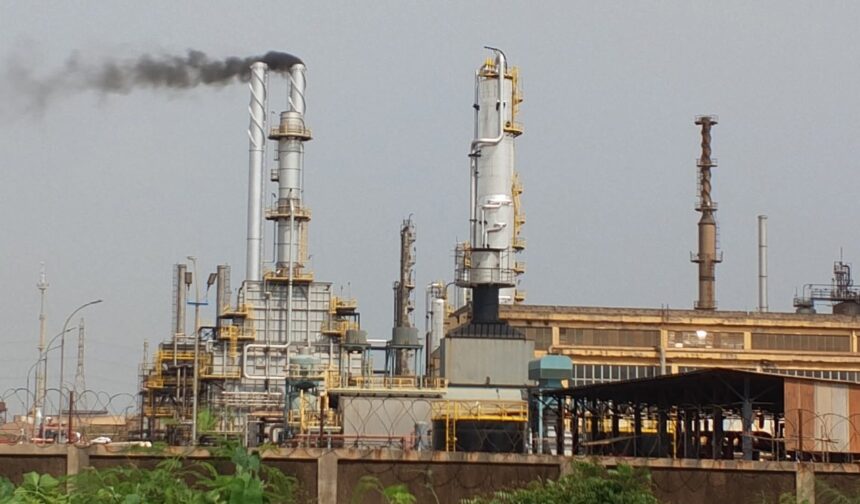
After more than six years of inactivity, Ghana’s only state-owned refinery, the Tema Oil Refinery (TOR) Limited, has resumed crude oil processing, marking a major milestone for the country’s downstream petroleum sector.
Checks by atinkaonline.com confirm that TOR restarted operations at its Crude Distillation Unit (CDU) four days ago, following the successful completion of a critical turnaround maintenance exercise. The refinery is currently processing about 28,000 barrels of crude oil per stream day, signalling a gradual but significant return to operations.
The restart has been widely welcomed by petroleum consumers and industry stakeholders, many of whom have long raised concerns about the refinery’s prolonged shutdown and its implications for fuel imports, pricing, and national energy security.
Sources within TOR say management is already working to scale up production. Plans are underway to commission a new furnace, F-61, which is expected to boost output to 45,000 barrels per stream day, with a longer-term target of 55,000 barrels per stream day.
Weekend checks by atinkaonline.com at the refinery confirmed active operations, with smoke observed from two stacks near the CDU and the utility station running at full capacity — clear indicators that refining activities have resumed.
TOR’s revival has also reignited debate about its troubled past. Under the previous administration, efforts to introduce a private strategic partner to rehabilitate the refinery were mired in controversy, with critics citing alleged lack of transparency. Labour unions strongly opposed the process, leading to petitions to the Office of the Special Prosecutor for investigations.
Some industry analysts believe the refinery narrowly avoided privatisation following the change in government after the December 7, 2024, general elections, a development they say created room for renewed state-led intervention and essential maintenance works.
As TOR steadily ramps up production, expectations are high that its return will reduce Ghana’s dependence on fuel imports, stabilise supply, and restore confidence in the country’s downstream petroleum infrastructure.