


There is a peculiar kind of power that never appears on a ballot. It does not come with a press conference, a manifesto, or a campaign poster. Yet it shapes careers, settles disputes, opens doors, and closes them just as quietly.
Across Ghana and much of Africa, some of the most consequential decisions are made not in parliament buildings or boardrooms but in the homes of chiefs, the compounds of religious leaders, the offices of market queens, and the reunion halls of old school associations.
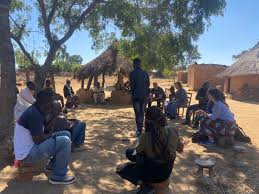
Ask anyone who has tried to secure land in a new town, and they will tell you the first visit was not to a government registry. It was to the chief’s palace. Traditional rulers in Ghana command an authority that predates the modern state and, in many communities, outlasts its credibility.
When a mining company wants access to land, when a developer eyes a stretch of coastline, when a political party needs community buy-in before elections, the path invariably leads through the chief.
No amount of official paperwork substitutes for the chief’s nod. And that nod is earned through relationship, respect, and sometimes resources.
Religious leaders operate a parallel channel of influence. In a country where surveys consistently show that faith is central to daily life, the pastor, imam, or priest who commands a congregation of thousands wields soft power of extraordinary reach.
When a prominent preacher endorses a candidate from the pulpit, or cautions his flock against a particular business, the effect ripples far beyond his walls.
Congregations trust their spiritual leaders in ways they have stopped trusting politicians. That trust is a form of currency.
Market queens are perhaps the most underappreciated power brokers of all. These women, who govern the informal trade networks of Ghana’s major markets, control the flow of goods, set informal pricing norms, manage credit among traders, and organize collective action when their interests are threatened.
They are the reason a nationwide strike among traders can bring commerce to a standstill. Their blessing can smooth a new vendor’s entry into a market or make it nearly impossible.
Then there are the old school associations and alumni networks. In Ghana, where you went to school is not merely biographical trivia. Presec, Achimota, KNUST, Legon, these are not just institutions.
They are lifelong networks of mutual obligation. A phone call from a senior man in your old boys’ network can move a job application to the top of a pile, unlock an introduction to a key investor, or smooth over a regulatory headache. The handshake between two men who once wore the same school tie carries weight that no LinkedIn connection can replicate.
Family elders complete the picture. In many households, major decisions about property, marriage, business partnerships, and inheritance are not finalized until the family head has spoken.
Even educated professionals earning international salaries defer to elders on matters considered sacred to the family. To ignore the family elder is to court long-running grievances that can derail even the most carefully laid plans.
What makes all of this fascinating is that none of these figures appear in civics textbooks as loci of power. They are not elected. They are not audited. They do not hold press conferences.
Yet understanding how to navigate their influence is among the most practical skills anyone operating in Ghanaian society can develop. The lesson is not that formal institutions do not matter. They do. But formal power and real power are not always the same address.
CREDIT: Manasseh Wintemah Apurum