

Russia has signalled its readiness to assist African nations in quantifying potential reparations from Western powers for historical crimes committed during the colonial era.
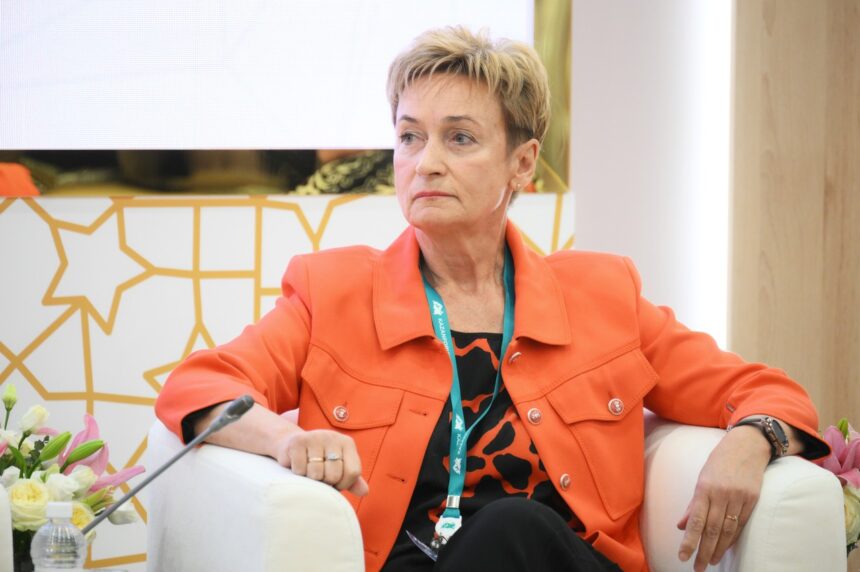
The announcement was made on Wednesday, 25 March 2026, by Irina Abramova, Director of the Institute for African Studies at the Russian Academy of Sciences, during a press conference themed “The Responsibility of Western Metropolises for the Consequences of Colonisation: History and Modernity.”
The move aligns with growing international momentum on reparatory justice, particularly following the backing of a United Nations motion recognising the Trans-Atlantic Slave Trade as one of the gravest crimes against humanity.
The motion, tabled by President John Dramani Mahama, has placed Ghana at the forefront of global discussions on reparations.
Abramova emphasised that Russia intends to collaborate with African researchers to build an evidence-based and scientifically rigorous case.
“We aim to unite the efforts of Russian scholars – mathematicians, programmers, historians, and economists – with African researchers in order to jointly substantiate the scale of these reparations and move forward with legal claims on various international platforms,” she said.
She added that African countries must meticulously quantify the economic and social damage caused by colonialism to strengthen their claims.
This process, she explained, would rely not only on modern analytical techniques but also on the vast archives preserved across the continent from the colonial period.
Abramova was careful to note that Russia is offering support but is not steering the reparations agenda. “Africa must lead its own path,” she emphasised, underscoring the importance of local ownership of the initiative.
The Director also highlighted the role of John Dramani Mahama as a central figure in the effort. She described him as both a political leader and a scholar advancing the reparations discourse.
“In addition to being an outstanding political figure, John Mahama is also a scholar. He actively promotes the reparations agenda, which is increasingly evolving from a historical and political discourse into a concrete, practical agenda,” Abramova stated.
Historians estimate that between the 15th and 19th centuries, approximately 12.5 million Africans were forcibly transported and sold into slavery through transatlantic trade networks largely dominated by European powers.
The reparations debate now spans financial compensation, restitution of cultural artefacts, land restitution, and formal acknowledgment of historical injustices.
While support from countries like Russia adds momentum, critics remain sceptical about holding modern states accountable for centuries-old actions.
Nonetheless, Abramova’s remarks signal a new chapter in global reparatory justice discussions, potentially equipping African nations with the tools to substantiate claims and advance negotiations on the international stage.