


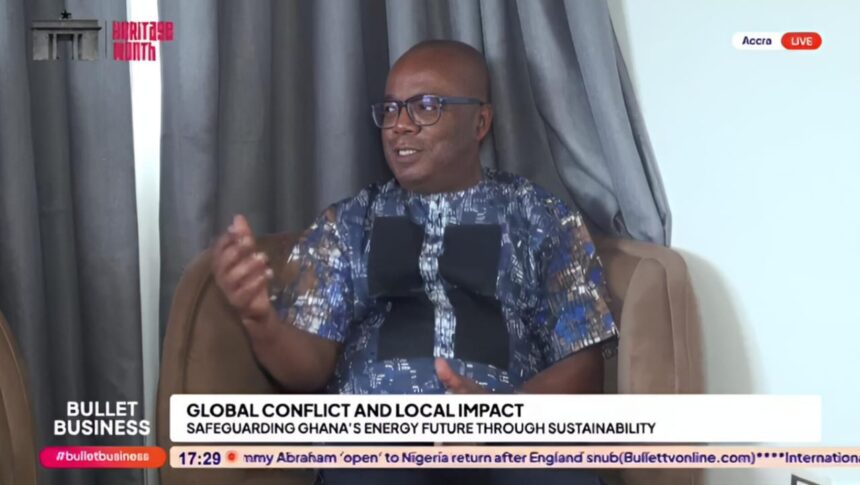
Ing. Prof. Samuel Gyamfi, a renewable energy expert, has raised concerns about the gap between policy development and actual implementation in Ghana’s energy sector.
Speaking on Bullet Business with Karen Dodoo Antwi on Bullet TV, Prof. Gyamfi noted that although Ghana has developed several sustainability and energy policies, the country continues to struggle with putting them into practice.
“Ghana has a lot of sustainability and energy policies, but the major challenge we are facing now is the implementation of those policies,” he stated.
Prof. Gyamfi also warned about the long-term implications of continued reliance on fossil fuels, particularly within the transport sector.
“Ghana’s transport system will come to an end in the next 10 to 15 years if we do not have more fossil fuel,” he explained.
He added that depending heavily on oil reserves without building sustainable alternatives could create serious challenges for future generations.
“If we rely on our oil reserves as a country, we will have questions to answer in 50 years’ time.”
Prof. Gyamfi is a lecturer in the Renewable Energy Engineering Programme at the University of Energy and Natural Resources. He currently serves as the Acting Head of the Mechanical and Manufacturing Engineering Department and also heads the UENR Energy Group.
His comments highlight the ongoing debate around Ghana’s energy transition, with experts urging stronger action toward renewable energy development, policy enforcement, and long-term sustainability planning.