

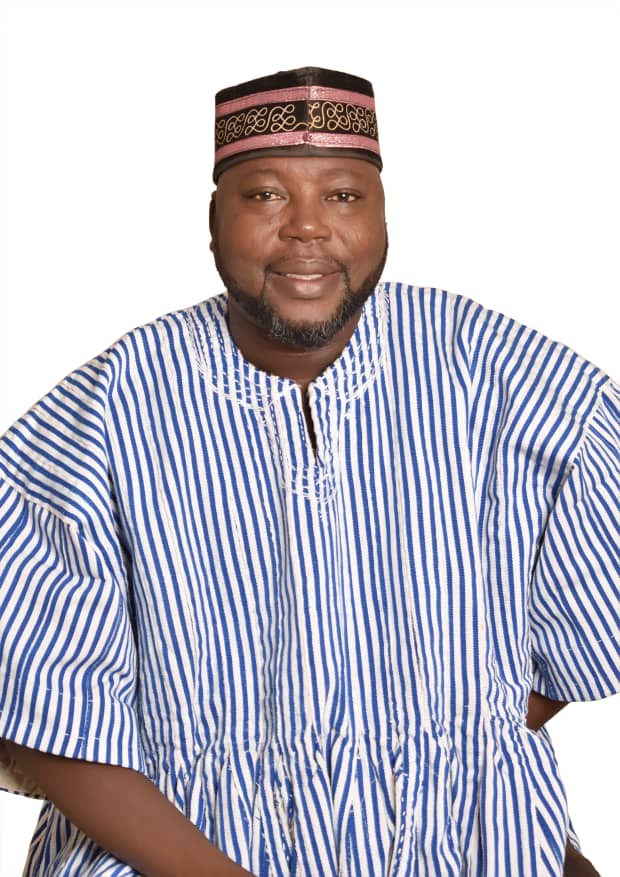
The National Chairman of the People’s National Convention (PNC), Samson Awingobit Asaki, has urged the government to extend invitations to all political parties ahead of Thursday’s presentation of the Bawku Mediation Report to President John Dramani Mahama.
The report, the outcome of months of intensive national mediation efforts led by the Asantehene, Otumfuo Osei Tutu II, is scheduled to be presented on December 11 at the Jubilee House. The initiative, chaired by the Asantehene, seeks to secure a sustainable resolution to the protracted Bawku conflict.
According to information available, invitations have been sent to a number of key institutions and dignitaries, including the National House of Chiefs, National Peace Council, Christian Council of Ghana, Office of the National Chief Imam, Catholic Secretariat, UNDP, British High Commission, Regional Ministers, and the National Security Coordinator. However, political parties were not included in the initial list — a development Mr. Asaki described as a “significant omission.”
“The Bawku conflict has national implications, and political parties are essential stakeholders in peacebuilding and governance,” Mr. Asaki said. “If this presentation is to carry full national legitimacy, then all political traditions, big or small, must be present. Government should correct this immediately and give the process a genuinely national character.”
He emphasized that political parties have historically contributed to stabilisation and peace efforts across the country, particularly in conflicts with ethnic, security, and governance dimensions. Excluding them, he argued, risks weakening national ownership of the mediation outcome.
“We cannot claim to seek lasting peace while excluding major actors whose cooperation is needed to sustain that peace,” he added.
The upcoming presentation is considered a major milestone in the ongoing high-level peace process, which has brought together multiple mediation committees and national institutions under the leadership of the Asantehene. The Bawku conflict — rooted in a long-standing chieftaincy and ethnic dispute between the Kusasi and Mamprusi communities — has over the years drawn the intervention of successive governments, traditional authorities, security agencies, and civil society groups.
While commending Otumfuo Osei Tutu II for his leadership, the PNC Chairman maintained that the credibility and success of the peace process hinge on broad participation.
“Peace is a collective responsibility,” he said. “If we are truly committed to ending the Bawku conflict once and for all, then every political party must be allowed a seat at the table.”
By Philip Azu