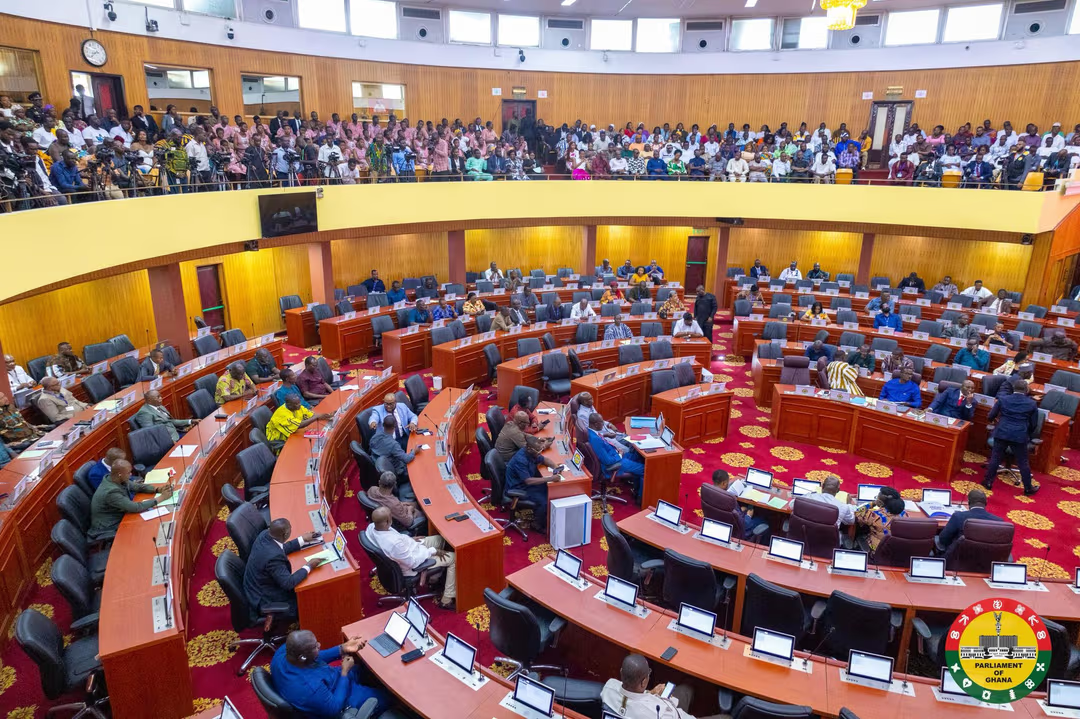



Private legal practitioner Ace Ankomah has accused Ghana’s Parliament of harboring a deep-seated aversion to independent constitutional bodies, particularly when those institutions begin to assert their mandates fully.
Speaking against the backdrop of renewed calls to scrap the Office of the Special Prosecutor (OSP), Mr. Ankomah argued that Parliament’s discomfort with independent oversight is not new. He cited the Auditor-General’s Office as a striking example.
“Parliament has a great aversion to all the independent institutions, even those set up by the Constitution,” he asserted.
Mr. Ankomah recalled that it took a protracted legal battle to compel the Auditor-General to exercise its constitutional powers of disallowance and surcharge tools that lay dormant for years after the 1992 Constitution came into force.
Once activated, those powers enabled the Auditor-General to recover approximately GH¢65 million for the state, according to World Bank figures. Yet, he noted, subsequent parliamentary manoeuvres sought to undermine the office’s independence, including efforts to reverse Supreme Court rulings that had strengthened its authority.
He further pointed to the controversial early retirement of former Auditor-General Daniel Domelevo, suggesting that the move weakened the institution’s effectiveness and credibility.
Mr. Ankomah’s remarks come as Majority Leader Mahama Ayariga and some Members of Parliament intensify calls for the abolition of the OSP. Mr. Ayariga, speaking in Parliament on Wednesday, December 3, questioned why significant budget allocations continue to be made to the OSP when, in his view, the Attorney-General’s Department remains under-resourced.
The Majority Leader argued that the Attorney-General should assume responsibility for all corruption investigations and prosecutions, effectively folding the OSP’s functions into the ministry.
For Mr. Ankomah, these developments reflect a broader pattern: Parliament’s resistance to independent institutions that challenge entrenched interests or expose inefficiencies. He warned that such tendencies risk weakening constitutional checks and balances, undermining accountability, and eroding public trust in governance.