


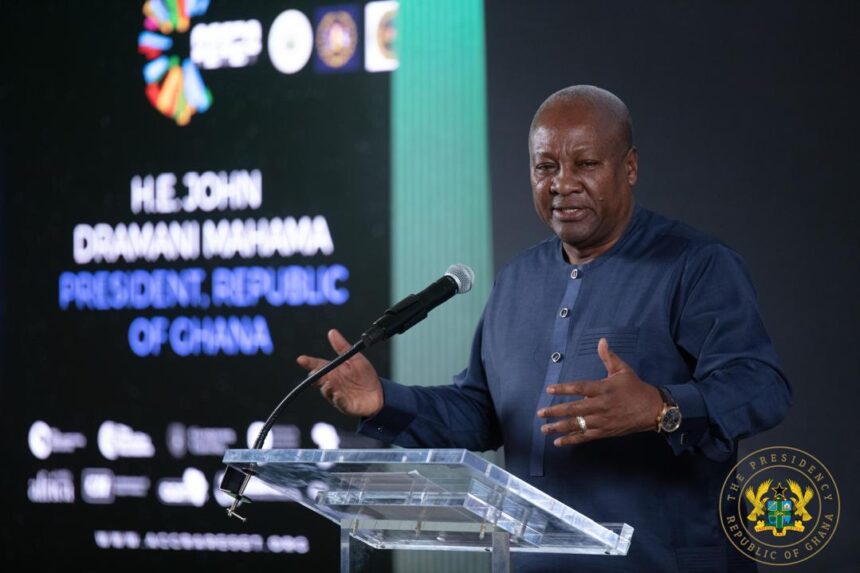
President John Dramani Mahama has pledged sweeping reforms to strengthen Ghana’s surgical care, reaffirming his government’s commitment to building a more efficient and accessible system nationwide.
Speaking at the 66th Annual Conference of the West African Association of Surgeons on Monday, February 9, Mr. Mahama outlined plans to bolster blood supply networks, improve referrals, and expand surgical services in underserved regions.
“Capacity building in surgery is both timely and compelling. Capacity building must be understood comprehensively,” he said. “It is not only about producing more surgeons; it is equally about strengthening the teams and the systems that support safe surgery, including anaesthesia, nursing, diagnosis, and more.”
The president stressed that reforms must extend beyond personnel to governance and infrastructure. “It also requires robust, critical governance. The government remains committed to strengthening these foundations. We will carefully study recommendations from this conference and work with stakeholders to implement those that require immediate change,” he added.
Mr. Mahama also promised sustainable financing for surgical care as part of broader health sector reforms, underscoring what he described as a long-term focus on accessible and safe surgical services for all Ghanaians.
Meanwhile, the Minister for Health, Kwabena Mintah Akandoh, has stressed that the success of surgical procedures and the prevention of avoidable deaths depend on the readiness of health systems, not just the presence of hospital buildings.
“These are not secondary conditions. They are the infrastructure of safety, and without them, even the best surgical skills are placed at risk,” he said.
He explained that improving surgical outcomes requires both targeted investment and strict operational discipline. Health facilities must be fully functional, staffed, equipped, and governed to meet required standards.
“Our goal is to ensure that facilities are not just built but are ready to deliver safe care every day,” Akandoh stated.
The minister highlighted the critical role of the West African College of Surgeons in accreditation and standard-setting, urging the safeguarding of training platforms while expanding supervision and improving quality across the surgical pipeline.