

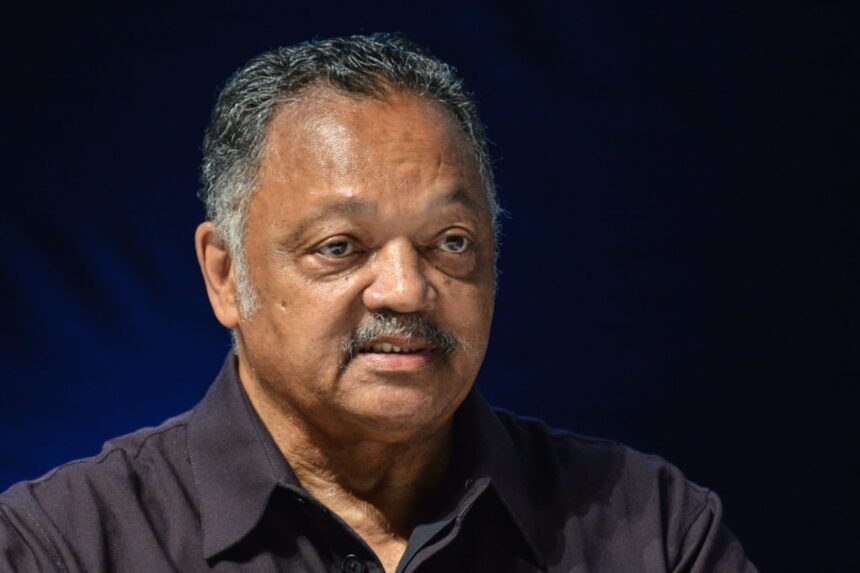
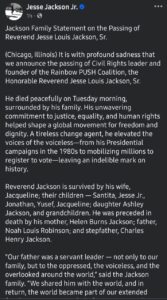
Rev. Jesse L. Jackson, the Baptist minister and civil rights activist who marched with the Rev. Dr. Martin Luther King Jr. and later sought the presidency, died on Tuesday in Chicago. He was 84.
His family, in a statement, described him as “a servant leader not only to our family, but to the oppressed, the voiceless, and the overlooked around the world.” They said he died peacefully, surrounded by loved ones. A cause of death was not immediately disclosed.
Mr. Jackson had lived for more than a decade with progressive supranuclear palsy, a neurological disorder that impairs movement and swallowing. He revealed in 2017 that he had Parkinson’s disease, which he had been treated for at Northwestern Medicine in Chicago.
A Voice of Protest and Politics
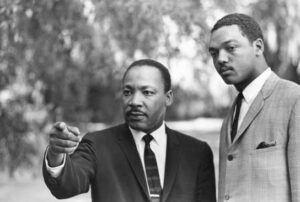
Born in Greenville, S.C., Mr. Jackson rose to prominence in the 1960s, joining demonstrations alongside Dr. King and later working full time for the Southern Christian Leadership Conference. He directed Operation Breadbasket, the group’s economic empowerment program, earning King’s praise as a gifted young organizer.
He was at the Lorraine Motel in Memphis when King was assassinated in 1968, an experience that propelled him to expand the movement for Black liberation. In 1971, he founded People United to Save Humanity, or PUSH, which sought to improve economic conditions for Black communities. Later, he launched the National Rainbow Coalition, which merged with PUSH in 1996 to form the Rainbow/PUSH Coalition.
Mr. Jackson twice ran for the Democratic presidential nomination, in 1984 and 1988. His first campaign won more than 18 percent of the primary vote, forcing the party to reckon with the power of Black voters. Four years later, he captured 11 primaries and caucuses, cementing his role as a national political figure.
Controversy and Redemption
His 1984 campaign was marred by remarks referring to Jewish people as “hymies” and New York City as “hymietown.” He initially denied the comments but later offered a public apology. Despite the controversy, he continued to press for social programs, voting rights and affirmative action, insisting that “the great responsibility that we have today is to put the poor and the near-poor back on front of the American agenda.”
Diplomatic Missions
Beyond politics, Mr. Jackson became known for negotiating the release of Americans held abroad. He secured freedom for a U.S. Navy pilot from Syrian captors in 1984, 16 Americans detained in Cuba that same year, and three U.S. soldiers held in Yugoslavia in 1999. President Bill Clinton awarded him the Presidential Medal of Freedom in 2000 for his efforts.
Later Years
Mr. Jackson remained outspoken in recent decades, criticizing Donald Trump’s presidency and endorsing Senator Bernie Sanders in 2020. He also served as one of Washington, D.C.’s “shadow senators,” lobbying for statehood.
He married Jacqueline Brown in 1962, who survives him, along with their five children, including former Representative Jesse Jackson Jr. Public observances will be held in Chicago, with further celebrations of life to be announced by the Rainbow/PUSH Coalition.
Rev. Al Sharpton, reflecting on Mr. Jackson’s legacy, once said: “He continued Martin Luther King’s movement for justice, how he cemented it in the North and made the King movement truly national. He changed the nation. He served in ways he never got credit.”