


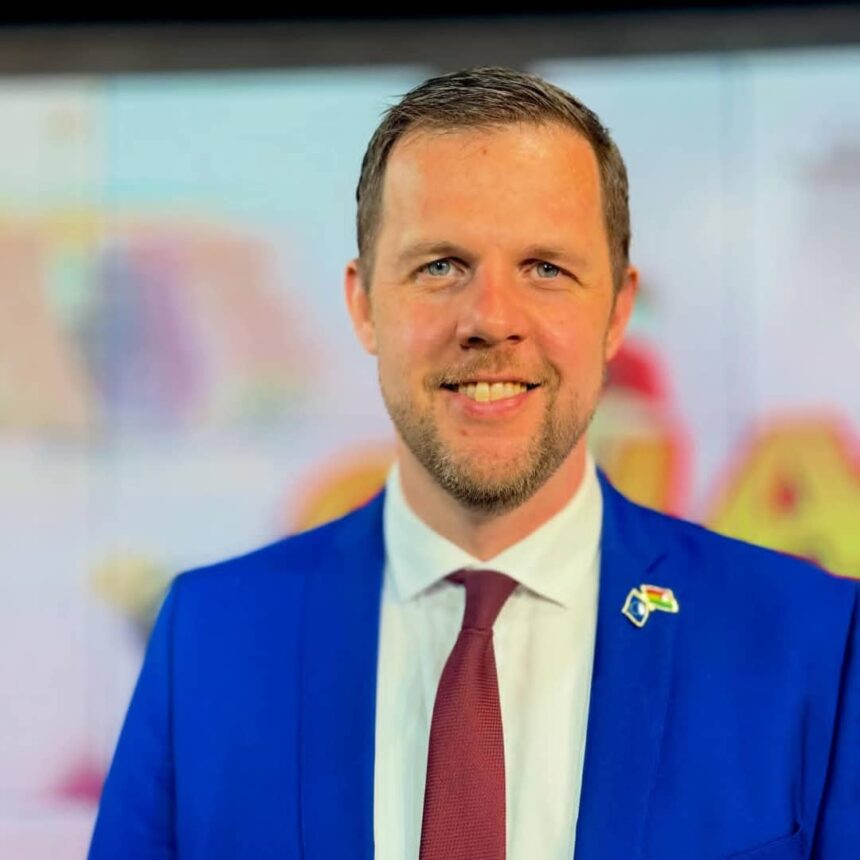
The European Union’s envoy to Ghana has voiced concern over the country’s low levels of female representation in politics, warning that without urgent reforms, gender parity in governance could take more than a century to achieve.
Speaking on Morning Target on Bullet TV on Monday, March 9, His Excellency, Jonas Claes, the EU Delegation’s Head, said he was “very surprised” by the data on women in Parliament.
“Women in Parliament, for example, represent under 15 percent, which is very low. Globally, the figures on average are 33 percent, which still requires improvement because women represent more than 33 percent of the population,” Mr. Claes said.
Currently, women hold just 14 percent of seats in Ghana’s legislature, a figure he described as falling short of global expectations. Representation at the municipal level, he added, is “worse.”
Mr. Claes pointed to the financial barriers in Ghana’s political system as a major obstacle.
“To run for office in Ghana is really, really expensive, excessively expensive, and I think women often struggle to put down the upfront investments to run for those offices,” he noted.
He expressed hope that Ghana’s ongoing Constitutional Review process could help address the monetization of politics, to create a more level playing field for women to participate in leadership.
While commending former President John Mahama’s administration for steps taken to advance gender equality, Mr. Claes warned that progress remains painfully slow. “It’s going to take Ghana 160 years to reach a level of power equality between men and women representation in governance if steps are not taken quickly to resolve the issue of gender inequality,” he said.