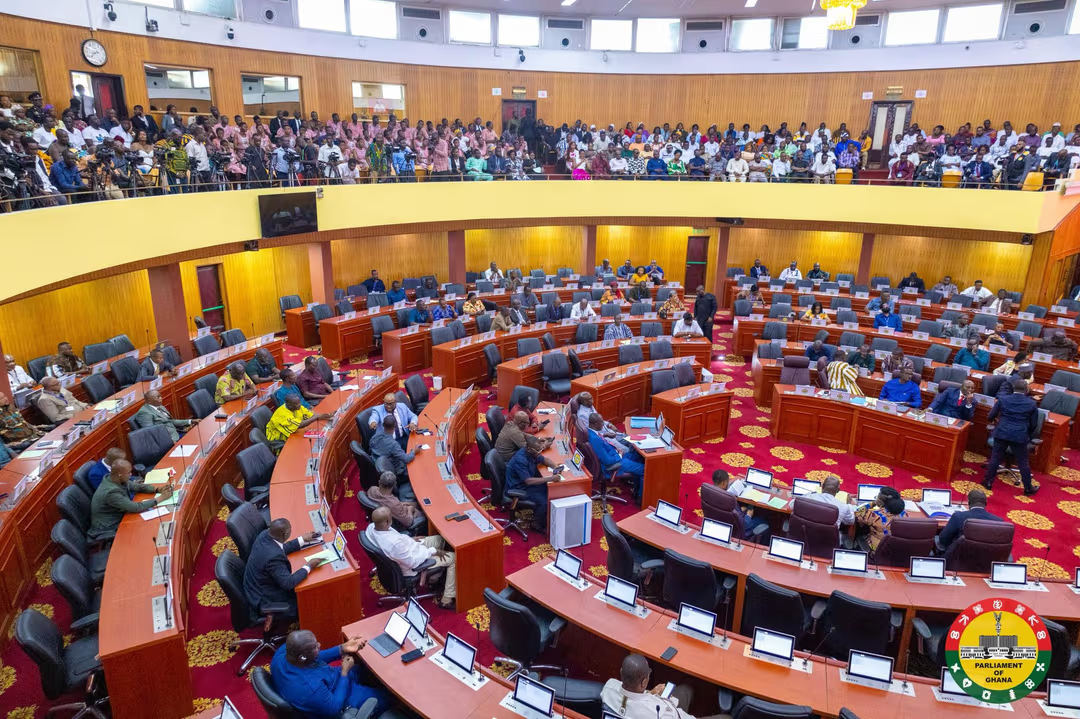



The Africa Policy Lens (APL) is calling on citizens, Civil Society Organisations (CSOs), and anti-corruption bodies to resist what it describes as the Mahama administration’s “strange and troubling” decision to reduce Ghana’s lithium royalty rate from 10% to 5%.
According to the policy think tank, the previous government had secured a mutually agreed 10% royalty stake with Barari DV Ghana Limited—an arrangement widely viewed as one of the most favourable mining agreements in the country’s history.
However, the current government, which previously criticised the 10% rate as too low while in opposition, is now seeking to slash the rate to 5%. The administration argues that the earlier agreement was “illegally” negotiated, a justification APL describes as misleading and suspicious.
Addressing the media at a press conference, Dr. Hayford Mensah Ayerakwa, Director of Research and Administration at APL, said the government’s justification for cutting Ghana’s stake “smacks of corruption” and contradicts its responsibility to protect national interests.
“The previous government acted appropriately in securing what remains Ghana’s most advantageous mining agreement to date,” APL stated, after outlining the detailed processes that led to the 10% royalty arrangement.
Dr. Ayerakwa added that the current administration’s claims regarding lithium pricing and the legality of the earlier lease are “misleading” and warrant swift scrutiny from citizens and anti-corruption institutions.
He warned that implementing the proposed reduction would cause Ghana to lose millions of dollars in potential revenue, describing the move as a textbook example of a mineral agreement vulnerable to corruption.
“Reducing the royalty rate from 10% to 5% would not only short-change the country but could also grant the company legal grounds that may complicate future attempts to raise the rate—possibly triggering arbitration under international investment treaties,” Dr. Ayerakwa cautioned.
APL is urging all stakeholders to demand transparency and ensure that Ghana’s mineral resources are managed in a manner that protects the national interest.
By Ebenezer Madugu