


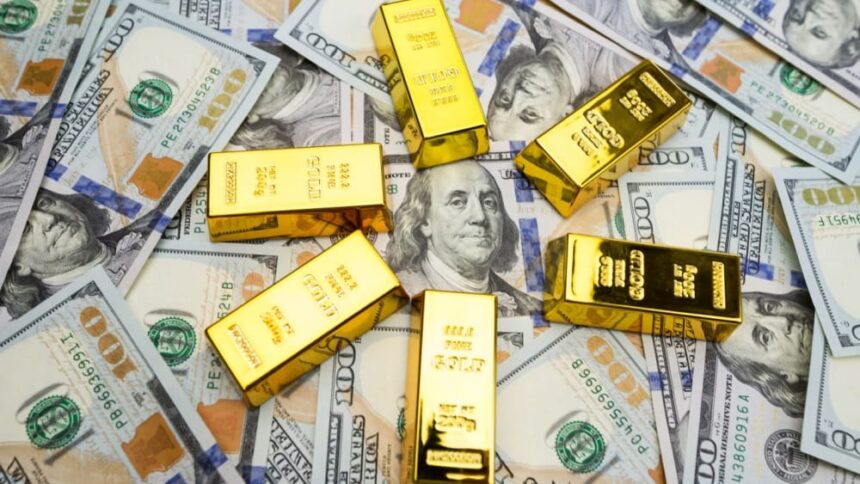
Gold has surpassed the US dollar to become the world’s largest global reserve asset, according to a Bloomberg report.
This shift is driven by growing interest in gold among central banks and financial institutions, which view it as a stable store of value amid economic uncertainties.
Gold’s enduring appeal lies in its independence from any single government, making it a reliable hedge during periods of political or economic tension.
The change in reserve asset rankings reflects broader trends in global finance, where traditional currencies face increasing competition from alternative assets.
Following global trade wars, the dollar experienced a major boost in assets, surpassing all previous records since mid-2025.
Global central bank gold reserves rose by roughly 15 percent compared to 2024, with major buyers including China, India, Turkey, and several Middle Eastern countries.
For the first time since 1996, foreign central banks now hold more gold than U.S. Treasuries in their reserves, marking a turning point in global reserve management.
At the beginning of 2026, gold seen as a durable asset quickly became a preferred hedge against currency volatility and headline inflation.
Gold prices in January 2026 hit a new record high of $5,300, breaking the previous all-time record.
This surge followed U.S. President Donald Trump’s dismissal of concerns over a weaker dollar.
The largest producers of gold are China, Australia, the United States, South Africa, Peru, Russia, and Indonesia.
The biggest consumers of gold jewelry, however, are India, China, Turkey, the United States, Saudi Arabia, Russia, and the UAE.