


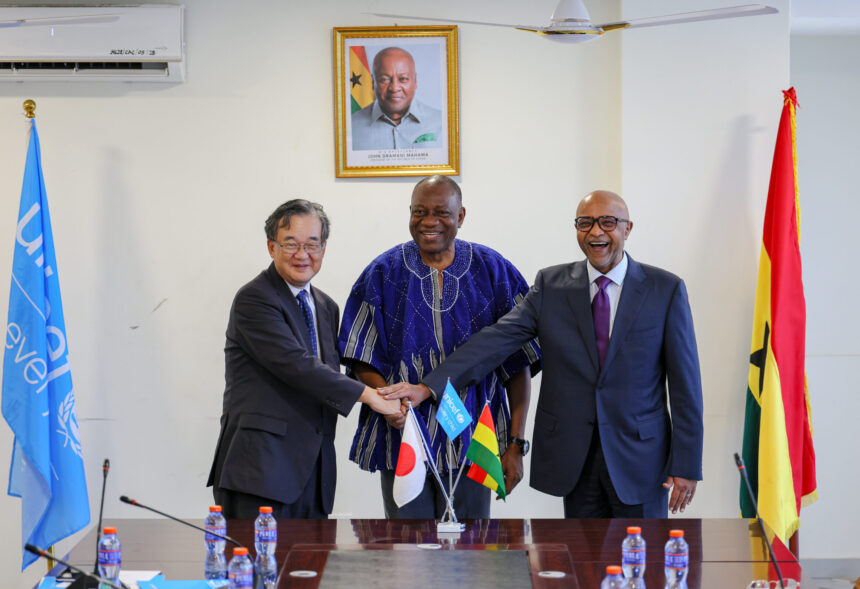
A historic US$2.3 million Public-Private Partnership to fight child labour throughout the nation has been formally inaugurated by the governments of Ghana, Japan, and UNICEF.
Over 13,000 vulnerable children and caregivers will be protected throughout this 12-month program, which aims to boost the country’s protective environment by utilising private sector experience and Japanese innovation.
The partnership fills a critical financing need in the child protection sector, since an estimated 1.1 million children in Ghana are currently involved in child labour. In order to improve child protection throughout the landscapes, especially in the fields of agriculture, fisheries, and illicit mining, the initiative focuses on five important regions: Ashanti, Eastern, Western North, Ahafo, and Central.
The project will modernise Ghana’s Child Labour Monitoring System through digital tools, improving data exchange between key ministries and private sector partners.
It advances the Women, Peace and Security agenda by empowering young girls and promoting women’s leadership, while also supporting environmentally sustainable practices in rural areas. The initiative further expands the Child Labour Free Zone model, positioning Ghana’s exports to meet global human rights standards.
Speaking at the launch, Japan’s Ambassador to Ghana, Hiroshi Yoshimoto, reaffirmed his country’s commitment to responsible economic development.
“Japan is committed to fostering a global industrial ecosystem where economic growth and human rights go hand in hand. Through this investment, we are bringing Japanese innovation and private-sector expertise to the forefront of Ghana’s mission to end child labour,” he stated.
He added that strengthening human rights due diligence and promoting green transformation in agriculture and mining communities would ensure sustainable trade relations between the two countries.
Also speaking at the event, Osama Makkawi Khogali highlighted the importance of a holistic approach to tackling child labour.
“Everything is connected: a child’s protection, their education, and their family’s economic resilience. This partnership is transformative because it addresses the root causes of child labour through a multi-sectoral lens,” he noted.
“By integrating digital technology to make vulnerable children ‘visible’ to social services, we are strengthening the systems that keep families together. Investing in the protection of Ghana’s children is the smartest investment we can make for the country’s long-term development,” he added.
The initiative marks a significant step toward strengthening child protection systems in Ghana while promoting sustainable development and human rights.