


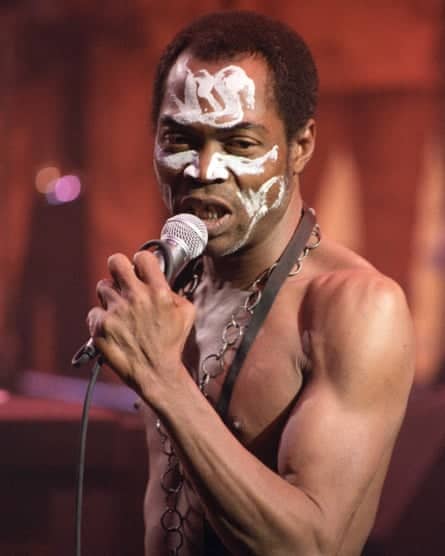
On December 19, the Recording Academy announced that Fela Kuti the Nigerian Afrobeat pioneer, activist and cultural icon who died in 1997 will be honored with a Grammy Lifetime Achievement Award. He is the first African musician ever to receive the distinction.
The award places Kuti alongside legends like The Beatles, Johnny Cash, John Coltrane, Aretha Franklin, Jimi Hendrix, Bob Marley and Frank Sinatra, all recognized for “creative contributions of outstanding artistic significance to the field of recording.”
The honour will be presented at the Recording Academy’s Special Merit Awards ceremony on January 31, 2026, during Grammy Week, a day before the main awards show.
“Fela Kuti’s music was a fearless voice of Africa, its rhythms carried truth, resistance and freedom, inspiring generations of African musicians to speak boldly through sound,” said Senegalese superstar Youssou N’Dour.
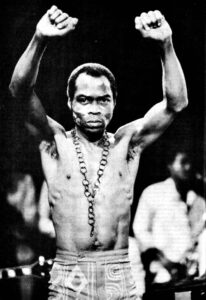
Known as the “Black President,” Kuti was one of the rare artists identified by a single name. He created Afrobeat, a genre that blended jazz, funk and traditional African rhythms into a powerful new sound. His bands often swelled to more than 30 members, with dancers, backup singers, and multiple bass guitars and saxophones. Kuti himself played saxophone, keyboards, guitar, drums and trumpet. He sang mostly in Nigerian Pidgin English, making his music accessible across Africa.
Kuti rejected the conventions of the music industry. He disliked party songs and love ballads, sometimes releasing seven albums in a single year. He refused to perform live versions of recorded tracks, and his songs often stretched far beyond radio length; Confusion, one of his most famous albums, was a single 45‑minute piece split into two sides.
South Africa’s BCUC (Bantu Continua Uhuru Consciousness), winners of the 2023 WOMEX Artist Award, called him their “spiritual muse,” saying his fearless approach gave them courage to make music without boundaries.
Kuti’s political awakening began during a 1969 stay in Los Angeles, where he befriended members of the Black Panther Party. His music quickly became a weapon against oppression, targeting Nigeria’s military dictatorship and South African apartheid. In 1976, his album Zombie mocked Nigeria’s government. The following year, soldiers raided his Lagos compound, burning it down and destroying his instruments and master tapes. Kuti was beaten unconscious, and his mother, Funmilayo Ransome‑Kuti, was thrown from a window and later died from her injuries.
Fela never won a Grammy during his lifetime, but his influence has continued to resonate far beyond his era. In 2025, his 1976 album “Zombie” was inducted into the Grammy Hall of Fame, with the award accepted by his sons, Femi and Seun Kuti, a moment that reaffirmed just how far his music has travelled.
Zombie is only the fourth African record among more than 1,100 releases.
Kuti also ran for president of Nigeria in 1979, though unsuccessfully. He was arrested repeatedly under President Muhammadu Buhari’s military regime, once at Lagos airport before a U.S. tour. Sentenced to five years in prison, he was held for over a year until Buhari was overthrown in 1985. Amnesty International described him as a “prisoner of conscience.”
Life after Death
Kuti died in 1997 from complications related to AIDS. His brother, Olikoye Ransome‑Kuti, a pediatrician and former Nigerian health minister, confirmed the cause, noting that Fela had dismissed AIDS as a fabrication. His death sparked a surge in condom sales in Nigeria and helped raise awareness of the epidemic. More than one million people attended his funeral.
His influence has only grown. In 2002, the tribute album Red Hot + Riot: The Music and Spirit of Fela Kuti featured artists like Sade, D’Angelo, Nile Rodgers, Questlove and Taj Mahal, with proceeds supporting AIDS awareness. In 2009, Jay‑Z and Will Smith produced Fela!, a Broadway musical that earned 11 Tony Award nominations.
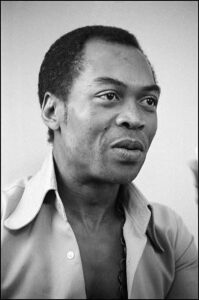
For today’s musicians, he remains a guiding light. “Fela for me is the chapter heading in my musical education,” said Tunde Adebimpe, Nigerian American actor and lead singer of TV on the Radio. “He is the originator who showed us music as a power move calling out corruption… and it moves nyash.”
Malian singer Salif Keita, a four‑time Grammy nominee, added: “Brother Fela was a great influence for my music. I loved him very much. He was a brave man. His legacy is undisputed.”
Nearly three decades after his death, Fela Kuti’s music continues to resonate across Africa and the world. With the Grammy Lifetime Achievement Award, his fearless voice, once silenced by repression is now enshrined among the greatest in recording history.