

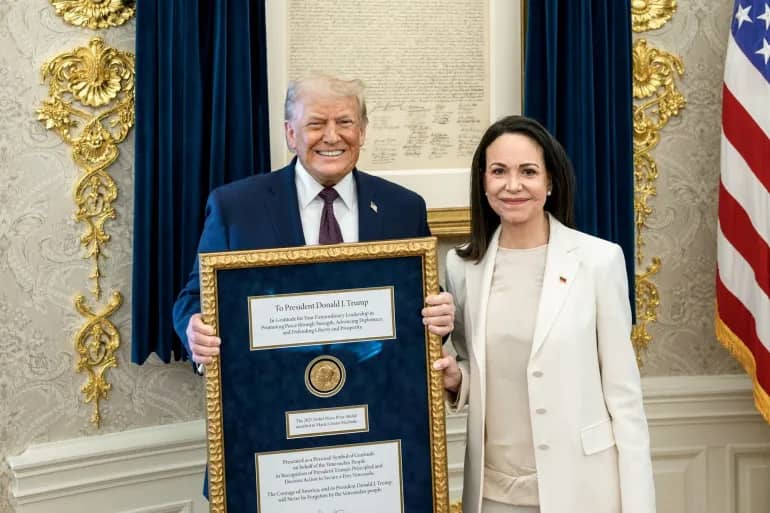
Couple of weeks after United States special forces abducted Venezuelan President Nicolás Maduro in Caracas, opposition leader María Corina Machado arrived at the White House for her first in-person meeting with President Donald J. Trump. With Venezuela’s political future unsettled, Machado placed her newly awarded Nobel Peace Prize in the hands of a man who has long coveted the honor.
The two posed in front of the Declaration of Independence in the Oval Office. Trump, beaming, clasped a large golden frame encasing the medal. The gesture raised immediate questions: Did the prize now belong to Trump, and could it alter his approach to Venezuela?
A White House official confirmed that Trump had agreed to keep the award. On his Truth Social platform, Trump wrote: “It was my Great Honor to meet Maria Corina Machado, of Venezuela, today. She is a wonderful woman who has been through so much. Maria presented me with her Nobel Peace Prize for the work I have done. Such a wonderful gesture of mutual respect. Thank you Maria!”
Machado’s Path to the Prize
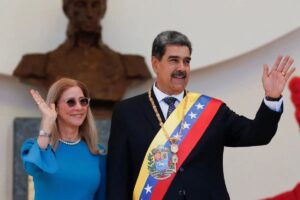
Machado, 58, leads the opposition party Vente Venezuela and has been one of Maduro’s fiercest critics. In 2023, she won the opposition’s presidential primary, positioning herself to challenge Maduro in the 2024 election. But Venezuela’s Supreme Tribunal of Justice upheld a ban preventing her candidacy, citing her support for U.S. sanctions and alleged links to a weapons plot. The court also accused her of contributing to losses at Venezuelan assets abroad, including Citgo and Monómeros.
Edmundo González Urrutia, a diplomat, replaced her as the opposition candidate. Machado campaigned for him, but Maduro ultimately claimed victory in a disputed election widely denounced as fraudulent by United Nations experts and nine Latin American governments. After more than a year in hiding and defying a travel ban, Machado secretly left Venezuela in December to collect her Nobel in Oslo. The Nobel Committee praised her “tireless work promoting democratic rights for the people of Venezuela and for her struggle to achieve a just and peaceful transition from dictatorship to democracy.”
A Prize Handed to Trump
Trump’s desire for the Nobel Peace Prize has been a recurring theme. Before the 2025 announcement, he insisted he deserved it, calling it a “big insult” if he did not win. At the United Nations General Assembly in September, he declared, “Everyone says I should get the Nobel Peace Prize. I ended seven wars. No president or prime minister has ever done anything close to that.” He cited conflicts from Cambodia and Thailand to Armenia and Azerbaijan, as well as the Gaza ceasefire deal. Analysts noted that many of those conflicts remain unresolved, with violence continuing in Gaza and tensions persisting between India and Pakistan.
Frustrated, Trump wrote on January 7: “I single-handedly ENDED 8 WARS, and Norway, a NATO Member, foolishly chose not to give me the Nobel Peace Prize.” The Norwegian Nobel Committee, which awards the prize, is independent of Norway’s government.
The White House later released a photo of Trump and Machado holding the framed medal. The inscription read: “Presented as a personal symbol of gratitude on behalf of the Venezuelan people, in recognition of President Trump’s principled and decisive action in pursuit of a free Venezuela.” Machado told reporters the meeting was “excellent” and said she gave Trump the medal as “a recognition for his unique commitment with our freedom.”
Who Owns the Prize?
Despite Trump’s possession of the medal, Nobel statutes are clear: prizes cannot be revoked, reallocated, or transferred. Machado remains the laureate. The Nobel Peace Center reiterated this on X: “A medal can change owners, but the title of a Nobel Peace Prize laureate cannot.”
Implications for Venezuela
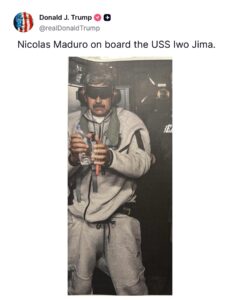
Maduro, 63, was abducted by U.S. forces on January 3. Since then, questions have swirled over who will lead Venezuela and whom Trump will support. He quickly dismissed Machado’s prospects. “She doesn’t have the support within or the respect within the country. She’s a very nice woman, but she doesn’t have the respect,” Trump said at a news conference.
The Washington Post reported that Trump withheld support because Machado accepted the Nobel rather than rejecting it outright. One source called her acceptance the “ultimate sin,” while another said, “If she had turned it down and said, ‘I can’t accept it because it’s Donald Trump’s,’ she’d be the president of Venezuela today.”
Instead, Trump has thrown his weight behind Maduro’s deputy, Delcy Rodríguez, who was sworn in as interim president and has signaled eagerness to work with Washington. Trump described a phone call with Rodríguez as “very good,” citing discussions on oil, minerals, trade, and national security. “This partnership between the United States of America and Venezuela will be a spectacular one FOR ALL,” he wrote. Rodríguez called the conversation long and productive, focused on a bilateral agenda.
Machado left the White House with a gift bag stamped with Trump’s gold signature. Whether she left with a clearer sense of her standing in Washington’s plans for Venezuela remains uncertain.