

By: Nana Achiaa Aboagye
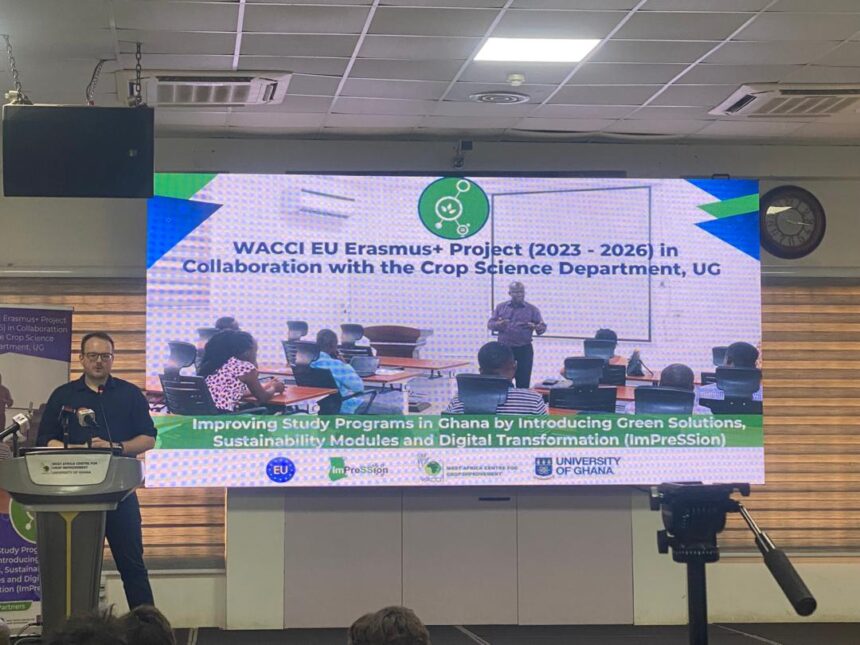
The European Union–funded Erasmus+ ImPreSSion Project has officially come to an end in Ghana, concluding a three-year initiative aimed at transforming higher education through technology, sustainability, and innovation.
Implemented by the West Africa Centre for Crop Improvement (WACCI) in collaboration with the Crop Science Department of the University of Ghana, the project ran from 2023 to 2026.
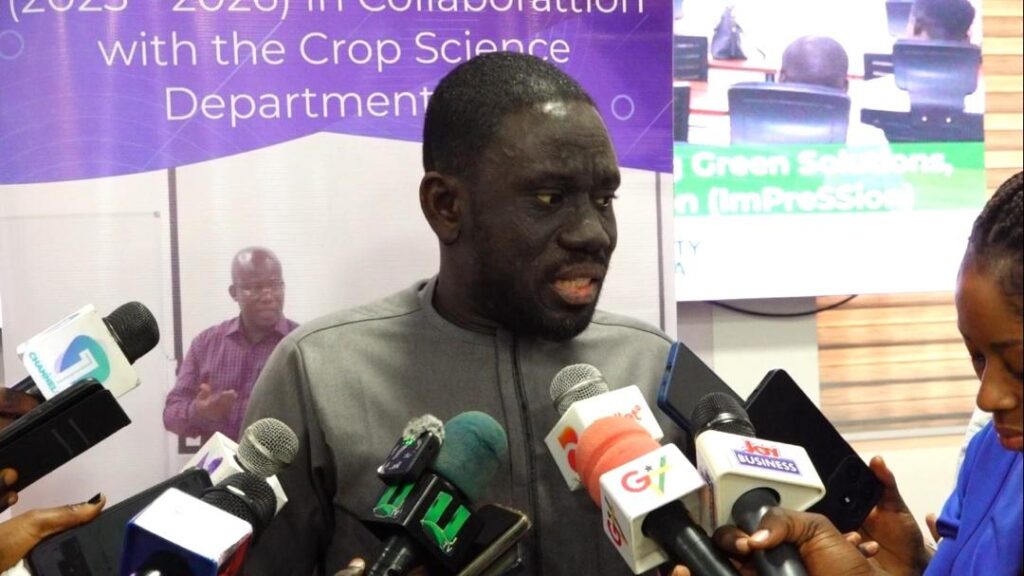
(DIRECTOR, BIOTECHNOLOGY CENTER, UNIVERSITY OF GHANA)
It focused on strengthening academic programmes through green solutions, sustainability modules, and digital transformation. The closing ceremony was held under the theme
“Unleashing the Power of Technology for Teaching and Learning.”
The ImPreSSion Project supported both lecturers and students by enhancing teaching methods, modernising learning systems, and expanding the use of digital tools. Although the project has officially ended, its impact is expected to continue as participating institutions sustain and build on the innovations introduced.
The initiative was a partnership between the European Union and three Ghanaian universities—University of Ghana (UG), University for Development Studies (UDS), and University of Energy and Natural Resources (UENR)—led by WACCI and UG’s Crop Science Department. It was designed to address gaps in higher education, particularly within the water, energy, and food nexus, which are critical to Ghana’s development.
Impact on Teaching and Learning
Speaking at the closing ceremony, the Director of the Biotechnology Centre at the University of Ghana, Dr. John Eleblu, said the project had successfully achieved its core objective of enhancing teaching and learning through innovation.
“The goal was to bring innovation into teaching and learning by introducing digital tools that enhance the student learning experience. We integrated green solutions, sustainable models, and digital transformation into the curricula of two programmes across three universities,” he said.
Dr. Eleblu noted that the project significantly improved teaching capacity.
“Lecturers can now pre-record lectures, explain concepts in detail, and engage students more effectively in class. Students who miss lectures can access recorded sessions. These tools will continue to benefit both lecturers and students,” he added.
He expressed appreciation to the European Union for the partnership, describing the project as highly sustainable due to the strong institutional capacity built.
Strong Partnerships and Digital Transformation
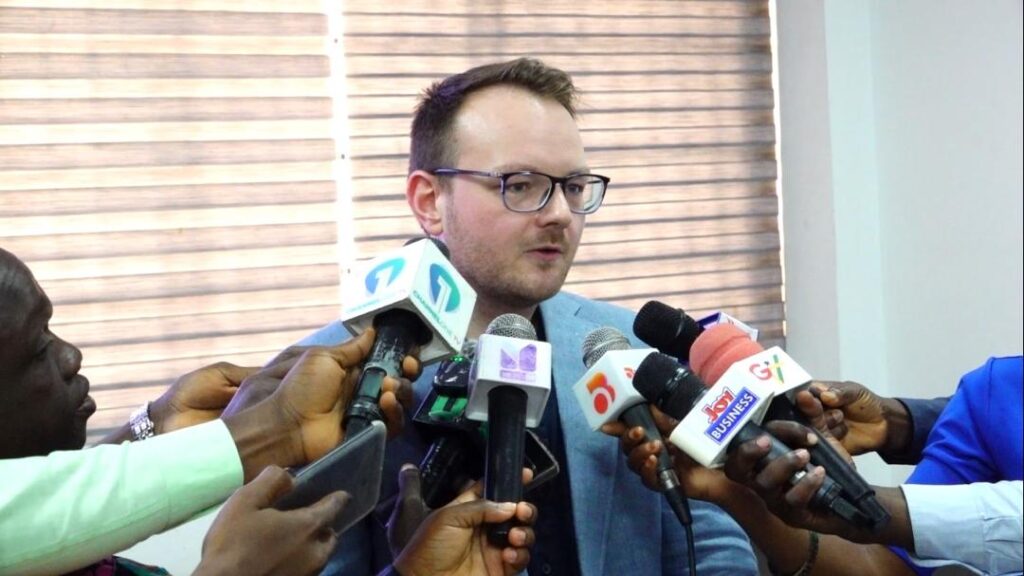
The Project Manager, Mr. Florian Balmes, said the initiative strengthened collaboration among the three universities and modernised their academic programmes.
“This is the beginning of something great. All three universities contributed to the main pillars of the project. We established video studios at the universities to support digital teaching and make learning more accessible online,” he said.
According to Mr. Balmes, the project helped bridge educational gaps by bringing together diverse perspectives through collaboration between Ghanaian institutions and the European Union.
“The EU also learned a lot about how academic systems operate in Ghana, and vice versa. This is just a starting point,” he added.
Lasting Legacy
Over the three-year period, lecturers received training in digital teaching, students gained access to innovative learning platforms, and sustainability concepts were fully embedded into academic programmes. These efforts are contributing to improved education quality and the training of environmentally conscious and technologically skilled graduates.
As the project concludes, stakeholders say the Erasmus+ ImPreSSion Project has strengthened the role of Ghanaian universities in driving sustainable development through education, innovation, and technology, while underscoring the importance of continued investment in digital transformation and green solutions in higher education.