

The Ashanti caucus of the New Patriotic Party (NPP) in Parliament has raised concerns about the government’s funding priorities after the decision to scale down the Suame Interchange Project. They argue that citing debt constraints is inconsistent with the government’s broader spending on road infrastructure.
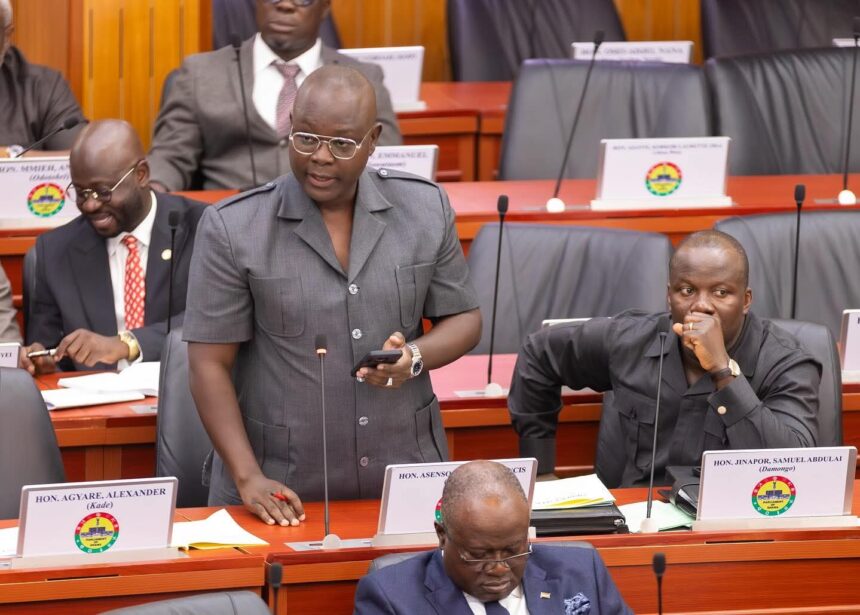
At a press briefing on Monday, February 6, Francis Asenso-Boakye, MP for Bantama and former Minister for Roads and Highways, questioned why resources could be mobilised for other major projects while Kumasi’s most critical interchange was being short-changed.
“If government could mobilise funds for the Ofankor–Nsawam road and other major projects, why is the Suame Interchange being short-changed?” he asked.
The caucus pointed to contradictions in government policy, noting that the Suame Interchange was originally part of the Big Push Road Programme in 2025, which was designed to guarantee continuous funding for strategic infrastructure.
Mr. Asenso-Boakye also cited public statements by the Finance Minister, who announced that GHS 43 billion has been allocated to road infrastructure this year. He questioned why a fraction of that amount could not be directed to completing the Suame Interchange in its original form.
The MPs further criticised the government for awarding 64 new road projects through sole sourcing, arguing that prioritising new contracts over completing ongoing, high-impact projects undermines both economic efficiency and long-term urban planning.
According to the caucus, failure to deliver the Suame Interchange as planned will prolong Kumasi’s traffic congestion, increase transport costs, reduce productivity, and worsen mobility across the city.
They therefore called on the government to restore the original four-tier design of the interchange and ensure that funding allocations reflect Kumasi’s strategic importance as Ghana’s second-largest city and a national transport hub.
“Kumasi deserves infrastructure that meets its scale and significance,” Mr. Asenso-Boakye said. “Short-changing major projects now will cost the city and the nation—far more in the long term.”