

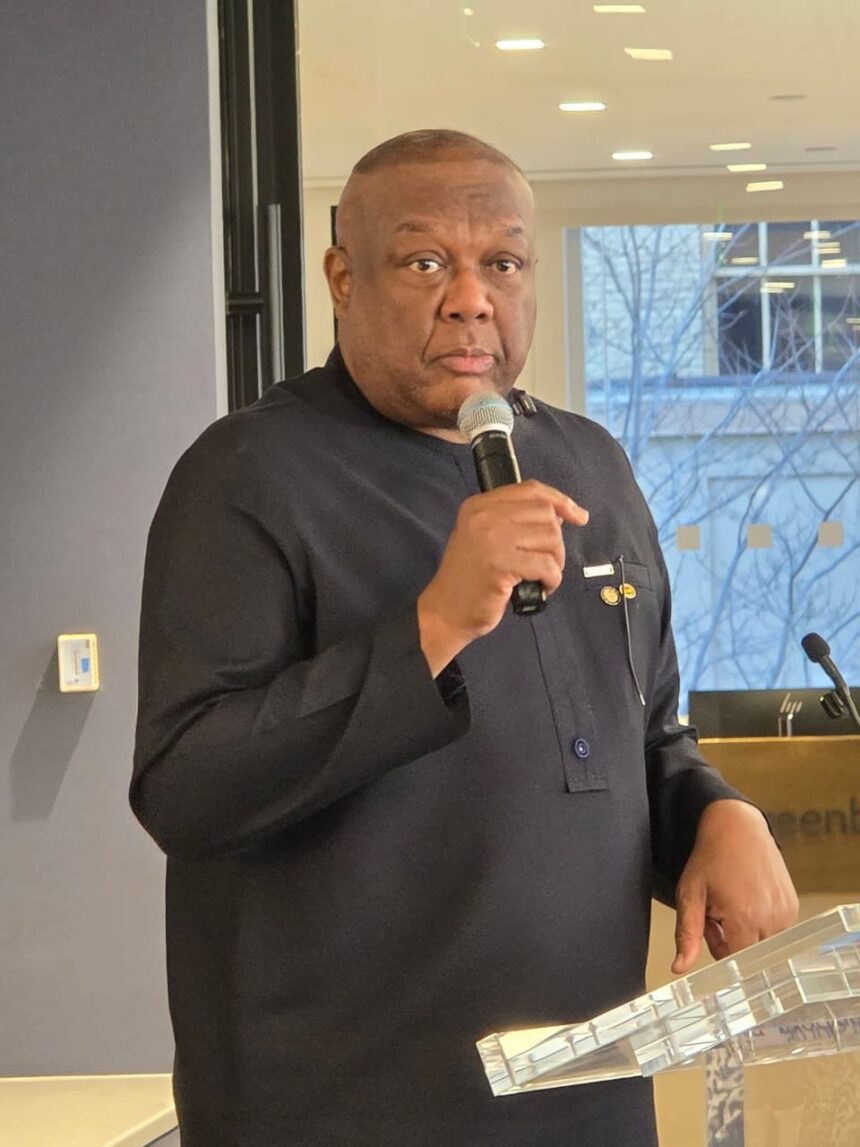
Ghana’s ambassador to the United States, Emmanuel Victor Smith, has issued a stark warning against vote-buying, describing the practice as the seed of systemic corruption that begins even before candidates assume public office.
His comments followed allegations of inducements during the National Democratic Congress parliamentary primaries on Feb. 7, where Baba Jamal was accused of distributing 32-inch television sets and boiled eggs to delegates after voting had commenced. The alleged giveaways reportedly led to jostling among voters eager to collect the items.
Speaking on Feb. 9, Mr. Smith said the distribution of money, gifts or favors during campaigns should not be mistaken for generosity. “When money or gifts are used to influence voters, we must call it what it truly is: corruption in its earliest form,” he said. “It is not generosity. It is not kindness. It is an investment.”
Mr. Smith argued that once candidates who engage in vote-buying gain office, governance often shifts away from public service toward recovering campaign expenses, rewarding financiers and pursuing personal gain. “Vote-buying does not merely distort elections; it manufactures corruption after elections,” he said. “Fighting corruption only in government contracts while tolerating it at the ballot box is self-deception.”
He urged both politicians and voters to reject inducements and embrace what he called a “politics of conscience” to safeguard Ghana’s democracy. Accepting gifts, he said, weakens accountability, while offering them erodes integrity.
Citing the Ayawaso East by-election, Mr. Smith cautioned that the open distribution of televisions, motorcycles or cash must be recognized as corruption, and he called on law enforcement agencies to act when such practices occur. “Elections should never be auctions,” he said, quoting Singapore’s founding prime minister, Lee Kuan Yew.