

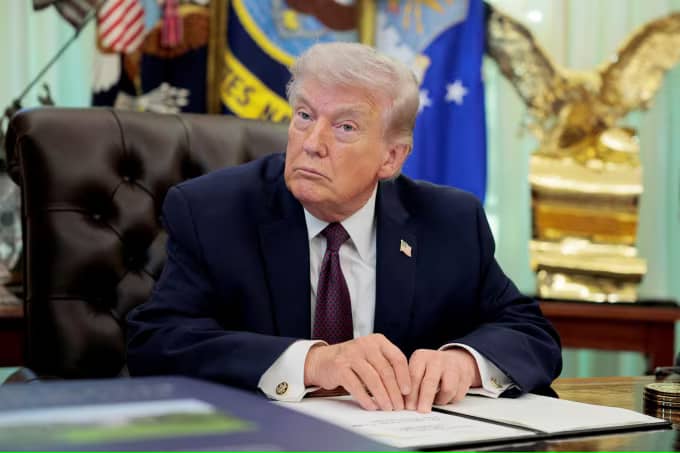
US President Donald Trump has warned that Iran could face overwhelming military action if it fails to reach an agreement by midnight, within the next 24 hours to reopen the Strait of Hormuz, a key route for global oil shipments.
Speaking at a White House press briefing on Monday April 6, Trump said the US is prepared to act swiftly if negotiations break down. The deadline for what he described as an “acceptable” agreement, ensuring the uninterrupted flow of energy through the Gulf is set for Tuesday evening in Washington.
“The entire country can be taken out in one night, and that night might be tomorrow night,” Trump said.
Despite the strong language, the president noted that discussions with Iranian officials appear to be ongoing and suggested that some leaders in Tehran are engaging seriously.
However, he admitted uncertainty about whether a deal will be reached.
Iran has pushed back against US proposals, rejecting the idea of a temporary ceasefire and instead demanding a permanent end to hostilities along with the removal of sanctions.
Trump also warned of severe consequences if Iran does not comply, suggesting that key infrastructure could be destroyed. “They’re going to have no bridges,” he said. “They’re going to have no power plants.”
The comments come shortly after US forces carried out a successful rescue mission involving crew members from a downed fighter jet in southern Iran, an operation Trump praised during the briefing.
Behind the scenes, diplomatic efforts are ongoing, with countries such as Pakistan, Turkey, and Egypt attempting to mediate. However, progress has been slow, partly due to communication challenges with Iranian officials amid disruptions.
Experts say meaningful negotiations are unlikely without a ceasefire in place first. Legal analysts have also raised concerns that targeting civilian infrastructure could violate international law.
When asked about such concerns, Trump dismissed them, arguing that the Iranian people would endure hardship in pursuit of freedom, even though he stated that regime change is not the goal.
He also criticized several US allies, including NATO members, accusing them of not offering enough support during the conflict.
CREDIT: Abigail Kessewaa and Mavis Fantevi