

Source: BBC
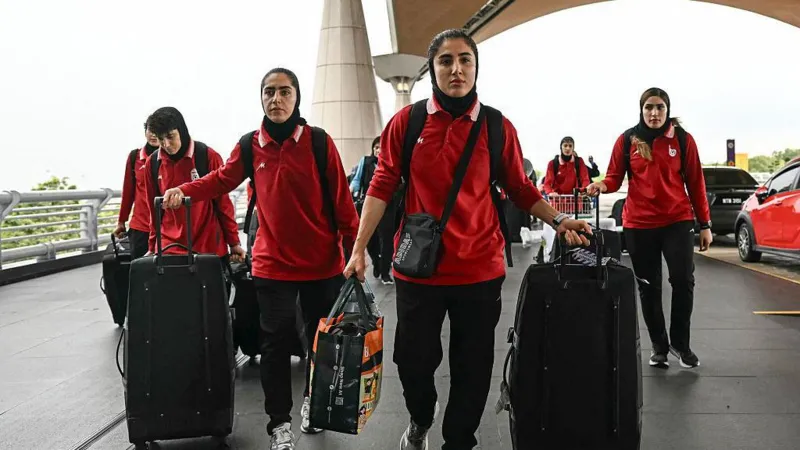
Five members of Iran women’s national football team have returned to Iran after withdrawing their applications for asylum in Australia, in a development that has drawn international attention.
Journey Back Home
The players were photographed re-entering Iran from Turkey on Wednesday after transiting through Malaysia and Oman.
Reports indicate they had earlier stopped in Igdir, eastern Turkey, where they were escorted by police to a hotel after clearing immigration procedures.
Initial Asylum Bid
The players had initially sought humanitarian visas in Australia after choosing not to sing Iran’s national anthem during their opening match at the Asian Cup—an act widely interpreted as a form of protest.
Australia’s Home Affairs Minister, Tony Burke, confirmed that five players were granted humanitarian visas, which would have allowed them to live and work in the country.
Pressure and Safety Concerns
Human rights groups have suggested that threats against the players’ families may have influenced their decision to return home.
Concerns intensified after footage emerged of a state TV presenter labeling the players “traitors” and calling for punishment following their silence during the anthem.
Some reports also indicate that officials accompanying the team may have instructed the players to sing the anthem in subsequent matches.
Identified Players
Activists have named three of the players who withdrew their asylum bids:
–Zahra Soltan Meshkehkar
–Mona Hamoudi
–Zahra Sarbali
Team captain Zahra Ghanbari is also believed to be among those who reconsidered.
Divided Outcome
Out of the group initially seeking asylum, only two players have reportedly remained behind as defectors.
Political Reactions
Iranian authorities have dismissed the asylum episode, accusing Australia of interference. State-linked media described the situation as a result of “psychological warfare” and external influence.
Meanwhile, Minister Tony Burke acknowledged the complexity of the situation: He noted that the Australian government could not remove the pressures surrounding the players’ decisions, highlighting the difficult circumstances they faced.
Wider Implications
The episode underscores the intersection of sports, politics, and human rights, particularly for athletes representing countries facing internal and external tensions.