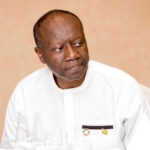


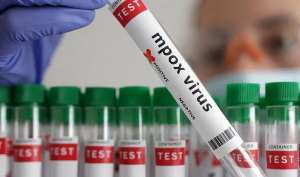
Ghana has recorded 1,038 confirmed cases and eight deaths from Mpox since a fresh outbreak of the disease began in May 2025, Health Minister Kwabena Mintah Akandoh has disclosed.
The minister made this known in Parliament while responding to a question from Minority Leader Alexander Afenyo-Markin about the rising number of infections across the country.
According to Mr Akandoh, the cases have been reported in 124 districts across all regions, representing 47.51% of the country, with the Greater Accra and Western Regions emerging as the most affected areas.
“Situation updates as of March 3, 2026 indicate that Ghana has recorded 1,038 confirmed cases and eight deaths, largely among persons with underlying health conditions,” the minister said.
He added that only one patient is currently on admission and there are no critical cases at the moment.
Government response
Mr Akandoh explained that the Ministry of Health, through the Ghana Health Service and with support from partners, activated a coordinated multi-sectoral response to contain the outbreak.
The measures include strengthened emergency operations, intensified surveillance, and contact tracing with a 21-day follow-up.
Laboratory testing is being conducted at key institutions including the National Public Health Reference Laboratory, the Noguchi Memorial Institute for Medical Research, and the Kumasi Centre for Collaborative Research.
Authorities have also reinforced infection prevention and control measures while expanding public education through collaboration with community leaders, civil society groups, and the media.
Vaccination campaign
The Health Minister revealed that reactive vaccination campaigns have been rolled out in identified hotspots.
Ghana received 33,600 Mpox vaccines from the Africa Centres for Disease Control and Prevention (Africa CDC) and the World Health Organization (WHO).
So far, 31,231 people in 12 districts across the Ashanti, Greater Accra, and Western Regions have been vaccinated, achieving over 95% coverage of the targeted population.
Government covering treatment costs
Mr Akandoh assured Parliament that the government is covering all medical costs for Mpox patients.
“Government has ensured that medical bills relating to patient care during this outbreak are covered by the state so that no cost is passed on to affected persons,” he said.
Cases declining
The minister noted that the country’s response strategy is producing results, with infections steadily declining.
Although sporadic cases have been recorded in recent months, average weekly infections have dropped significantly from 28 cases to about seven cases per week following the introduction of vaccination.
He also noted that Mpox is no longer classified as a Public Health Emergency of International Concern.
Mr Akandoh urged Members of Parliament to support ongoing public education efforts to ensure accurate information reaches communities across the country.