

Since independence in 1957, Ghana’s consumer landscape has been defined by a handful of brands that have not only survived but thrived, embedding themselves into the country’s lifestyle and economy. These companies, local champions and multinational giants alike, offer a lens into Ghana’s evolving business environment, where resilience, adaptation, and cultural resonance have been key to longevity. Most importantly, it highlights the vast possibilities of a free market if we fully embrace it.
Fan Milk aka ‘Porpi- Porpi’
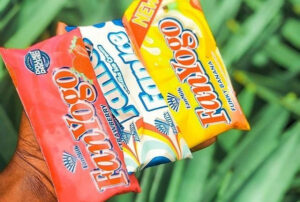
Founded in the early 1960s, Fan Milk Limited became synonymous with Ghanaian urban life. Its bicycle vendors selling FanYogo, FanIce, and FanChoco are iconic images across the cities in the country. The company’s ability to penetrate informal retail networks made it a case study in distribution innovation. Today, Fan Milk remains a dominant player in West Africa’s dairy market, now backed by multinational ownership under Danone.
Ashfoam : Comfort in Every Household
Established in 1978, Ashfoam has grown into Ghana’s leading mattress and furniture manufacturer. Its products are staples in homes across the country, symbolizing durability and affordability. Ashfoam’s expansion into furniture and bedding reflects Ghana’s rising middle class and the demand for quality domestic goods.
Ashfoam’s brand story is not only about comfort, but also about culture. Who can forget the flawless soundtrack crafted by legends Obrafour and Tic Tac for its iconic marketing campaign?

Kasapreko: Blending Tradition and Modernity
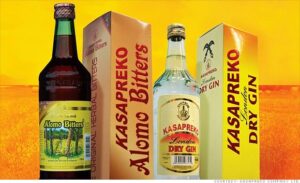
Founded in 1989, Kasapreko Company Limited disrupted Ghana’s beverage industry with Alomo Bitters, a herbal drink that quickly became a cultural phenomenon. Kasapreko’s success lies in marrying traditional herbal remedies with modern branding and export strategies. Today, the company produces soft drinks, bottled water, and spirits, positioning itself as a regional player in West Africa’s beverage market.
GTP: Fashioning National Identity
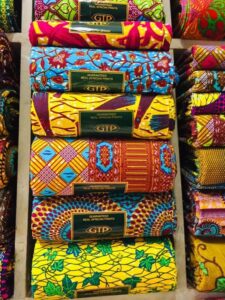
Since 1966, Ghana Textiles Printing (GTP) has been central to Ghanaian fashion. Its wax prints and kente-inspired designs are worn at weddings, funerals, and national celebrations. GTP’s fabrics are more than clothing they are cultural statements, reinforcing identity and pride. Despite competition from cheaper imports, GTP remains resilient by innovating designs and leveraging its heritage.
Multinationals in Ghana’s Market have also contributed significantly to the shaping our consumer lifestyle.
Unilever Ghana, operating since colonial times, continues to dominate with brands like Key Soap, Frytol, Pepsodent, and Blue Band.
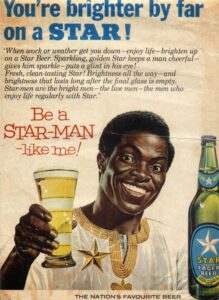
Guinness Ghana Breweries, established in 1960, has remained a dominant force in the beverage industry, with Star Beer and Malta Guinness becoming staples at social gatherings across the country. Its rival and senior, Accra Brewery PLC, has stayed true to its heritage, consistently championing the iconic Club Beer.
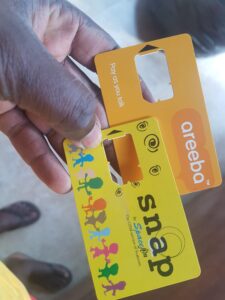
MTN Ghana, entered Ghana in 2006 as Spacefon and reinvented itself over time to revolutionize the telecommunications and mobile money. By 2025, MTN controlled over 60% of Ghana’s mobile market, underscoring its dominance in digital transformation.
These brands illustrate how business and lifestyle intersect in Ghana. Fan Milk’s street vendors, GTP’s fabrics at social events, and MTN’s mobile money transactions highlight the ways companies embed themselves into daily life. At 69 years since independence, Ghana’s brand landscape reflects both local ingenuity and global integration. Together with their multinational counterparts, these local companies have shaped consumer culture and driven economic growth.