

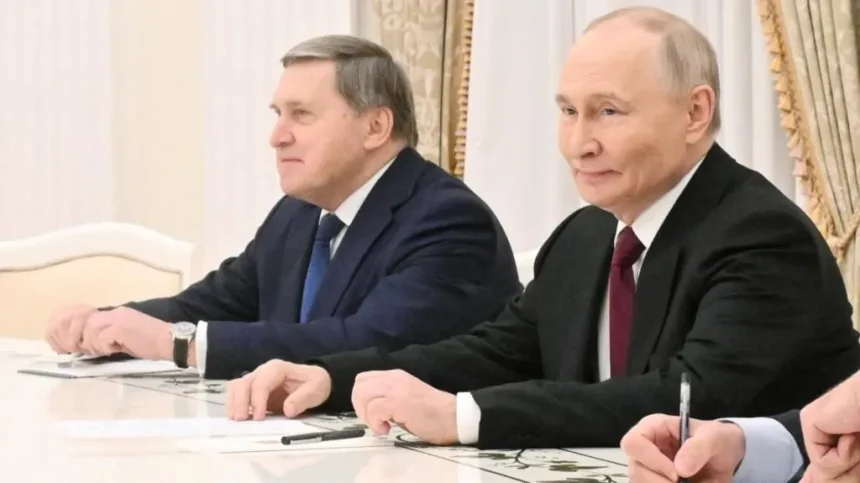
The White House says US envoy Steve Witkoff will meet Ukraine’s national security chief Rustem Umerov in Miami on Thursday. The meeting follows Witkoff’s almost five-hour discussion with Russian President Vladimir Putin in Moscow — talks the Kremlin says ended without agreement.
President Trump described the Moscow meeting as “reasonably good,” but warned that any resolution will require mutual cooperation. Meanwhile, Putin said a deal is unlikely soon, demanding Ukraine pull its troops from Russian-held Donbas.
Russian state media on Thursday quoted President Vladimir Putin as saying that the conflict in Ukraine would only end under two conditions: either Russia seizes the contested territories by force, or Ukrainian forces withdraw and halt hostilities. The remarks were reportedly made during an interview with India Today ahead of Putin’s two-day visit to the country.
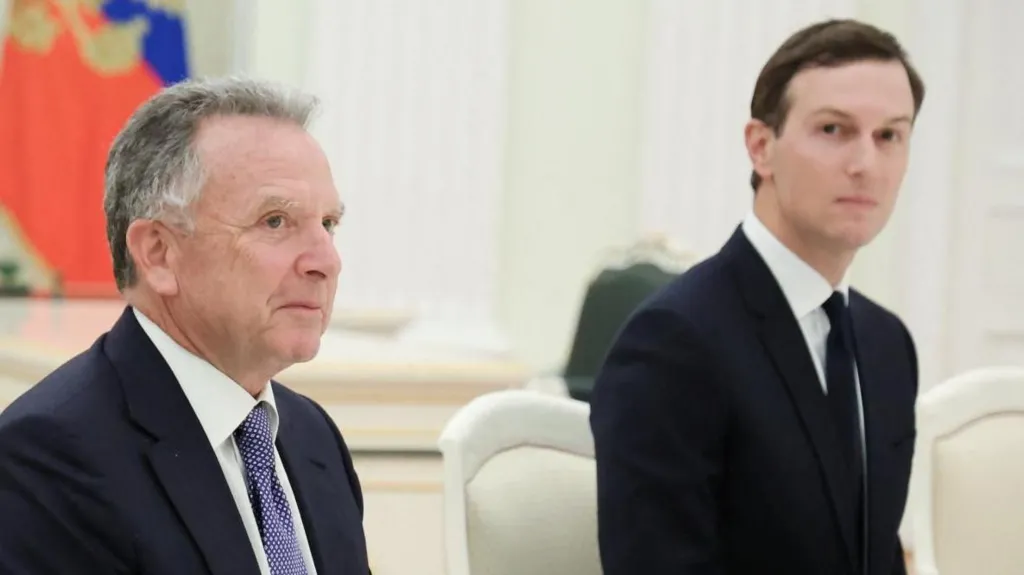
The comments came a day after high-level talks in Moscow involving US special envoy Steve Witkoff and former White House adviser Jared Kushner, who both met with Putin for several hours.
When asked whether the delegation believed the Russian leader was genuinely seeking an end to the war, US President Donald Trump said their impression was that Putin “would like to end the war,” though he added that achieving peace “takes two to tango.”
Ukrainian officials, however, dismissed the notion that Moscow is negotiating in good faith. Foreign Minister Andrii Sybhia accused Putin of “wasting the world’s time,” while Ukraine’s ambassador to the US said Kyiv does not “need to wait for promises from Russia.”
Ambassador Olga Stefanishyna acknowledged that “not too much progress” had been made so far in the talks but noted that discussions remained ongoing. She emphasized that both Ukraine and the United States are committed to securing a “just and lasting peace,” adding that Ukraine has heavily invested in this goal.
Ukrainian President Volodymyr Zelensky told reporters on Wednesday that the world senses a genuine chance to end the war, but he emphasized that negotiations must be reinforced by sustained pressure on Russia.
Following days of intensive US consultations with Ukrainian and European leaders, officials met in the Kremlin to discuss a potential peace deal with Russia. Concerns have emerged that the draft agreement may tilt heavily in Moscow’s favor.
“Some of the US proposals look more or less acceptable, though they need further discussion,” said Yuri Ushakov, foreign policy aide to President Putin, adding that several measures had been sharply criticised by the Russian leader.
Two major sticking points remain: the fate of Ukrainian territories under Russian occupation and the security guarantees offered to Kyiv.
In parallel, French President Emmanuel Macron, visiting Beijing, appealed to Chinese President Xi Jinping to contribute to efforts aimed at establishing a ceasefire in Ukraine.
Ukrainian and European officials argue that Nato membership remains the best safeguard against future Russian attacks, regardless of any peace settlement.
Moscow, however, remains firmly opposed to Kyiv joining the alliance. Former US President Donald Trump has also repeatedly indicated that he would block Ukraine’s accession.
The Kremlin stated on Wednesday that Ukraine’s Nato aspirations were a central topic during discussions in Moscow.
Putin’s senior adviser, Yuri Ushakov, indicated that recent Russian battlefield advances have bolstered Moscow’s position in peace negotiations. He noted that military successes have helped “make the assessments of our foreign partners regarding paths to a peace settlement more appropriate.”
Ahead of a US delegation’s visit to the Kremlin, Putin was filmed in army fatigues at a Russian command post, reviewing reports on partial Russian control of Pokrovsk and nearby settlements in eastern Ukraine. Although fighting continues in the city, Russian officials view the incremental territorial gains as a clear signal to Washington.
Recent analysis by the AFP, using data from the Institute for the Study of War, shows Russia seized about 701 sq km in November, now controlling 19.3% of Ukrainian territory. The Kremlin stated on Wednesday that Putin remains willing to meet with US officials “as many times as needed.”
As ties between Russia and the US show signs of warming, tensions between Moscow and Europe continue to grow.
President Putin has accused European countries of undermining Russia–US relations, issuing demands Moscow cannot accept, and obstructing the peace process.
Speaking at a forum in Moscow shortly before meeting US officials Witkoff and Kushner, Putin said that while he does not seek conflict with Europe, he is “ready for war.”
UK officials dismissed Putin’s statements as “more Kremlin claptrap from a leader not serious about peace.”
Meanwhile, Nato foreign ministers convened in Brussels, where Secretary-General Mark Rutte welcomed the peace talks but emphasized that Ukraine must remain in “the strongest position to continue defending itself.”
EU member states have agreed with the European Parliament on a plan to make Europe fully independent of Russian gas by the end of 2027.
Additionally, the European Commission has proposed raising €90 billion to support Ukraine’s military and essential services over the next two years, covering about two-thirds of its projected funding needs. The financing would come either from a “reparations loan” using frozen Russian assets in Belgium or through international borrowing.
Belgium has opposed the plan to use frozen Russian assets on its territory, citing potential legal consequences from Moscow. The European Central Bank (ECB) has also rejected the idea, stating it would not serve as a backstop for a reparations loan.
The proposed funding package of €90 billion is smaller than the €140 billion loan initially envisioned.
For ongoing updates, readers can follow North America correspondent Anthony Zurcher’s weekly US Politics Unspun newsletter. UK readers can sign up [here], and international readers can sign up here.
Source: BBC News