

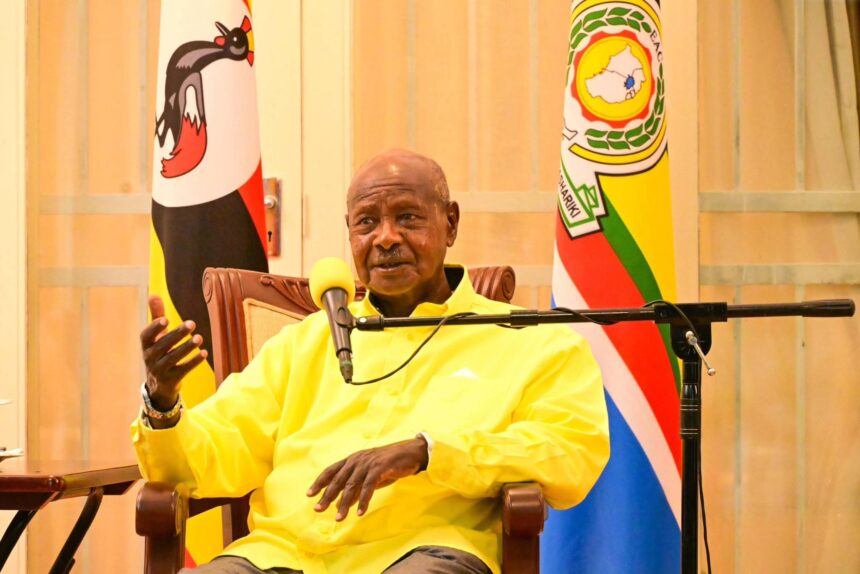
When Yoweri Museveni seized power in Uganda in 1986, he declared: “The problem of Africa in general and Uganda in particular is not the people but leaders who want to overstay in power.” Nearly four decades later, the 81-year-old president is seeking a seventh term in office, defying his own warning and testing the patience of a nation where most citizens have never known another leader.
Museveni rose to prominence as a rebel commander, leading insurgencies against autocratic governments and promising a “fundamental change” in Uganda’s politics. His early years in power were marked by optimism, foreign investment, and praise from Western allies for restoring order and tackling crises such as the AIDS epidemic. His government also won recognition for defeating the Lord’s Resistance Army, a brutal rebel group that terrorized Ugandans for nearly 20 years.
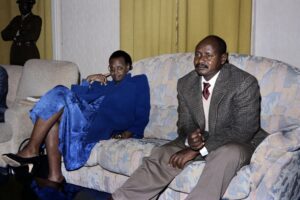
But that goodwill has long since faded. Allegations of corruption, authoritarianism, and nepotism have dogged Museveni’s rule. Political observers say graft has been central to his government from the beginning. Parliamentary reports accused his administration of selling state enterprises to relatives and cronies at knockdown prices under a privatization program, with proceeds allegedly embezzled. Museveni has acknowledged corruption exists but insists offenders have been prosecuted.
Mixed Record at Home, Strategic Alliances Abroad
Museveni has proven a shrewd political strategist, cultivating foreign allies by aligning with Western security priorities. Uganda has deployed peacekeepers to Somalia and South Sudan, and the country hosts one of the largest refugee populations in Africa. Yet at home, corruption has hollowed out state services. According to UNICEF, only one in four Ugandan children who enter primary school make it to secondary education, while well-paid jobs remain scarce.
Born to Christian nomadic pastoralists, Museveni studied political science in Tanzania, where he founded a militant movement that helped oust dictator Idi Amin. After a series of coups, his National Resistance Army toppled Tito Okello in 1986, ushering Museveni into power. His promise of a new political order resonated with Ugandans and Western donors alike. But as the economy grew, so did public anger over corruption and repression.
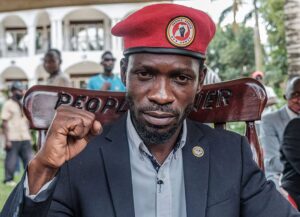
Museveni has won all six presidential elections he has contested, often amid allegations of irregularities and heavy-handed crackdowns on opposition supporters. In 2005, parliament scrapped presidential term limits, a move critics said was designed to keep him in power for life. His longtime rival, former ally and physician Kizza Besigye, accused him of presiding over corruption and rights abuses. Besigye himself was arrested in 2024 and charged with treason.
Succession Questions Loom
Museveni’s main challenger in Thursday’s election is Bobi Wine, a 43-year-old pop star turned politician who has galvanized Uganda’s youth. Analysts say Museveni’s victory is all but certain, but the bigger question is succession. The president has shown signs of frailty, and attention has turned to his son, Gen. Muhoozi Kainerugaba, Uganda’s military chief. Opposition figures accuse Museveni of fast-tracking his son’s career to prepare him for eventual succession, despite Kainerugaba’s controversial remarks on social media.
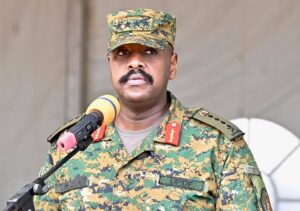
Veteran politicians who once fought alongside Museveni have been sidelined, fueling speculation of a dynastic handover. Observers caution that Museveni may use the election outcome to recalibrate his strategy, either by promoting other party members to deflect criticism or by consolidating his son’s rise. “This is less about the results that will be announced, and more about the mood on the ground,” one analyst noted, suggesting a handover could still be years away.
Museveni himself has dismissed criticism from Western powers, once remarking: “If the international community has lost confidence in us, then that is a compliment because they are habitually wrong.” In recent years, he has diversified Uganda’s foreign ties, cultivating relationships with China, Russia, Iran, and the United Arab Emirates. The discovery of substantial oil deposits has further bolstered his standing, with agreements signed with TotalEnergies and China’s CNOOC to build an export pipeline.
Uganda’s Political Landscape
Uganda’s political system requires a presidential candidate to secure 50 percent plus one vote to avoid a runoff. The country has 353 constituencies, each represented by a member of parliament. Additional seats are reserved for women, youth, persons with disabilities, workers, older persons, and the military. Ex-officio members, including the vice president and cabinet ministers, may sit in parliament but cannot vote on legislative matters.
As Ugandans head to the polls, the stakes extend beyond the ballot box. Museveni’s frailty, his son’s ambitions, and the opposition’s resilience all point to a nation at a crossroads. Whether Uganda experiences another “fundamental change” or a continuation of the status quo remains uncertain. For now, Museveni appears determined to remain in power even, if he needs to use a walking stick. Uganda votes January 15, 2026.